
Musictheatre
Premiere
April 18, 2026
Venue
Tampere-Talo
Production by Kimaira ry
In collaboration with La Chambre aux échos, Tampere-Talo,
and the Tampere-Biennale
“Leaving, and returning.
Always I am leaving, and returning.
Here I am again, I am back.”
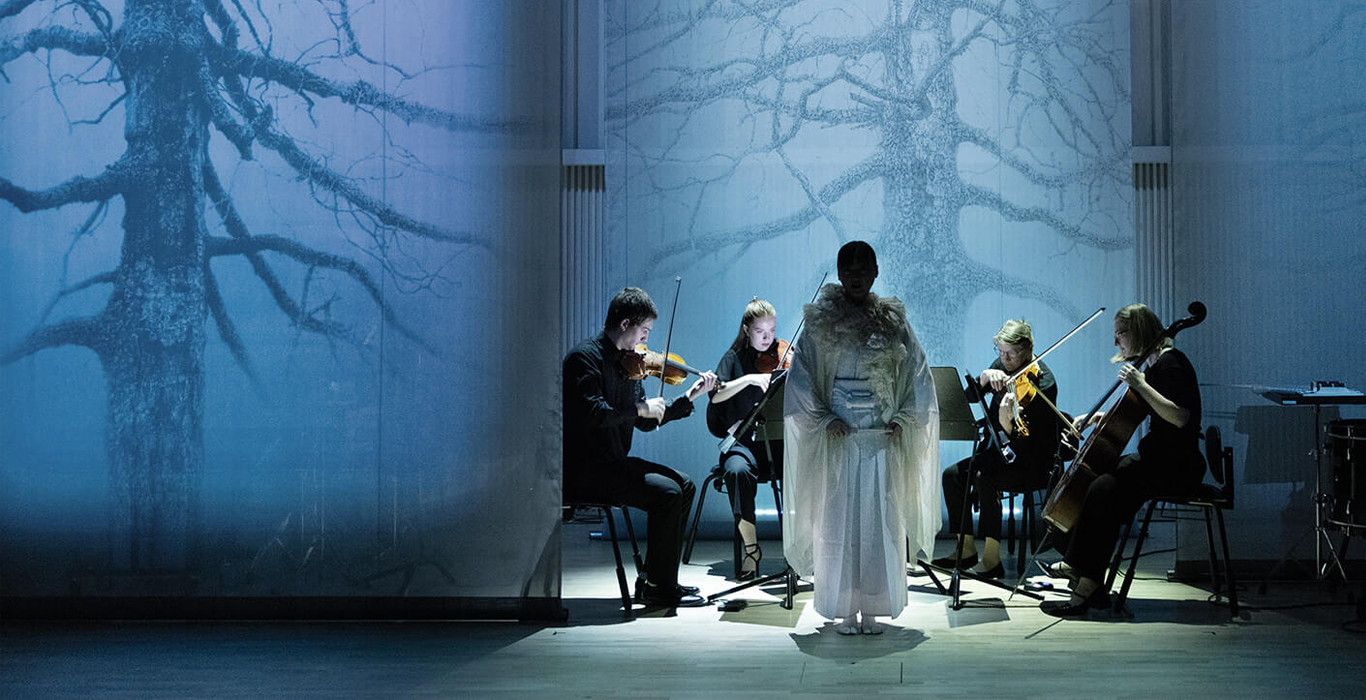
The unique contemporary music theatre evening Secret Flowers is built around classical Japanese Nō theatre. This montage of four contemporary works is a dive into the expressive world of Nō: the oldest still-active interdisciplinary tradition, centred on both the darker and brighter mysteries of being human.
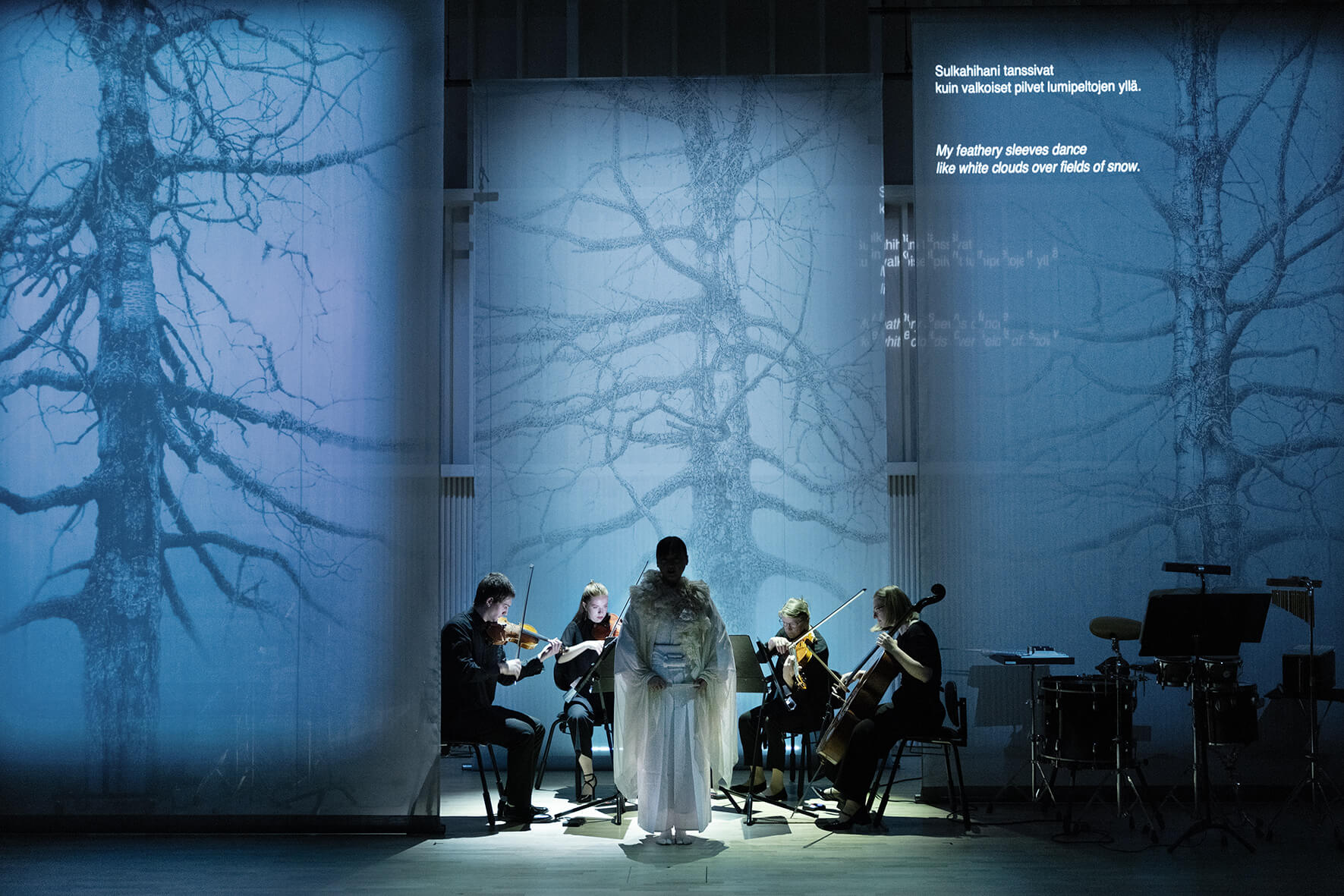
Composer Toshio Hosokawa brings the fragile aesthetic of Nō into the Western instrumental world in his string quartet Silent Flowers. Noriko Baba, in turn, gives Nō singing a new context in her Hagoromo Suite.
The evening opens and closes with two world premieres by composer Juha T. Koskinen. The libretto for Prologue (to all stories) is by Aleksi Barrière, and the chamber drama The Woman on the Sixth Street is composed on a libretto by writer Selja Ahava.
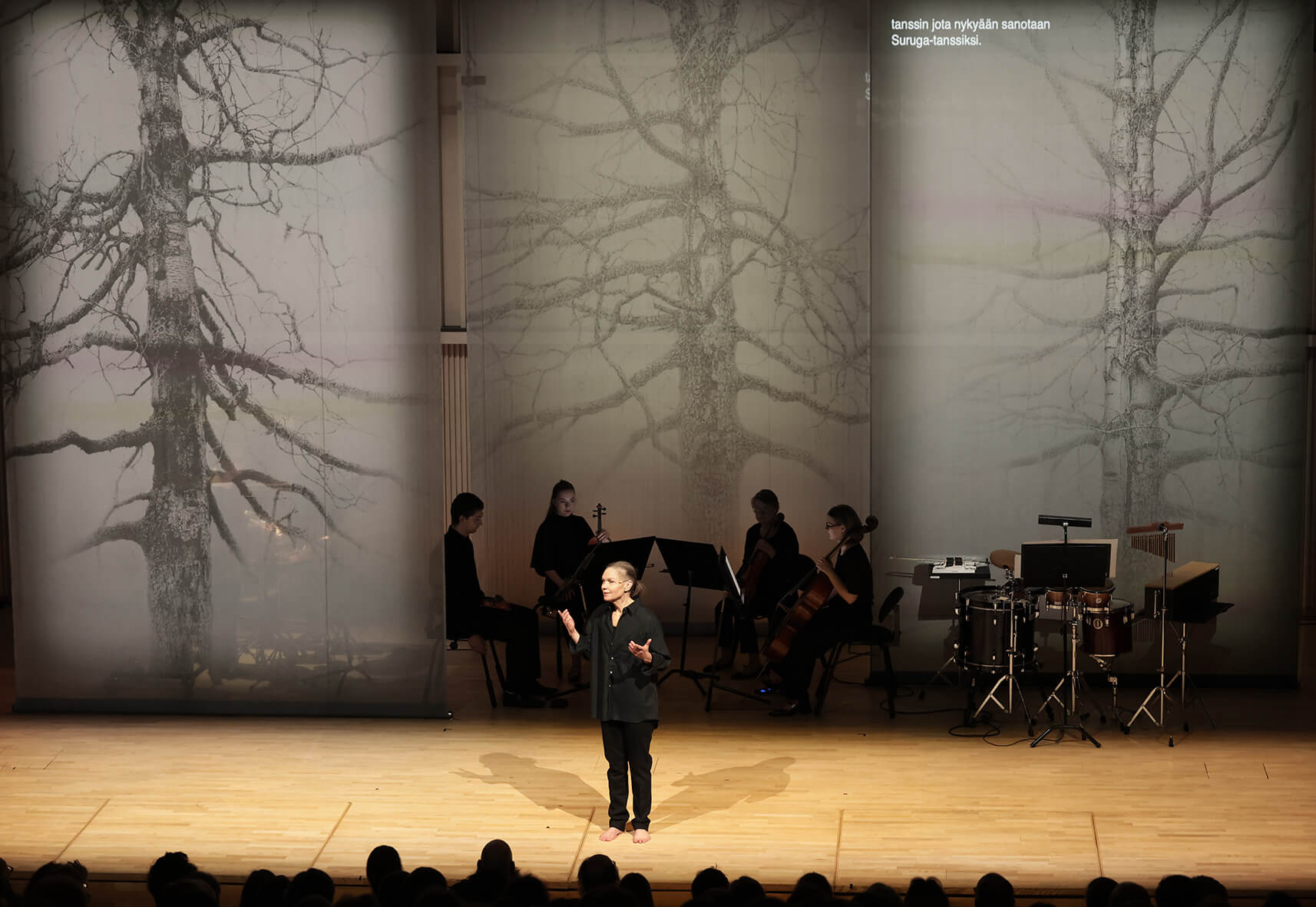
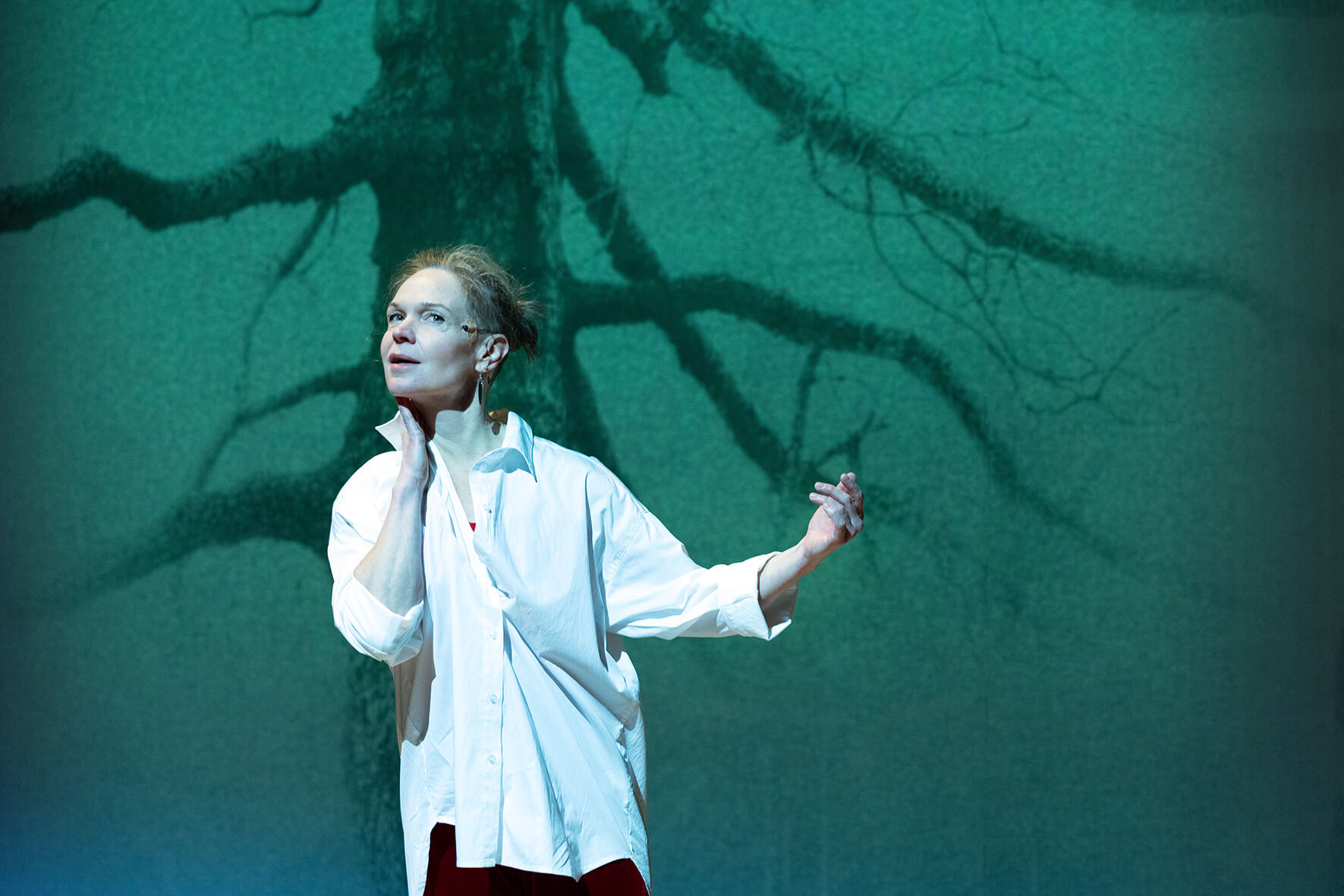
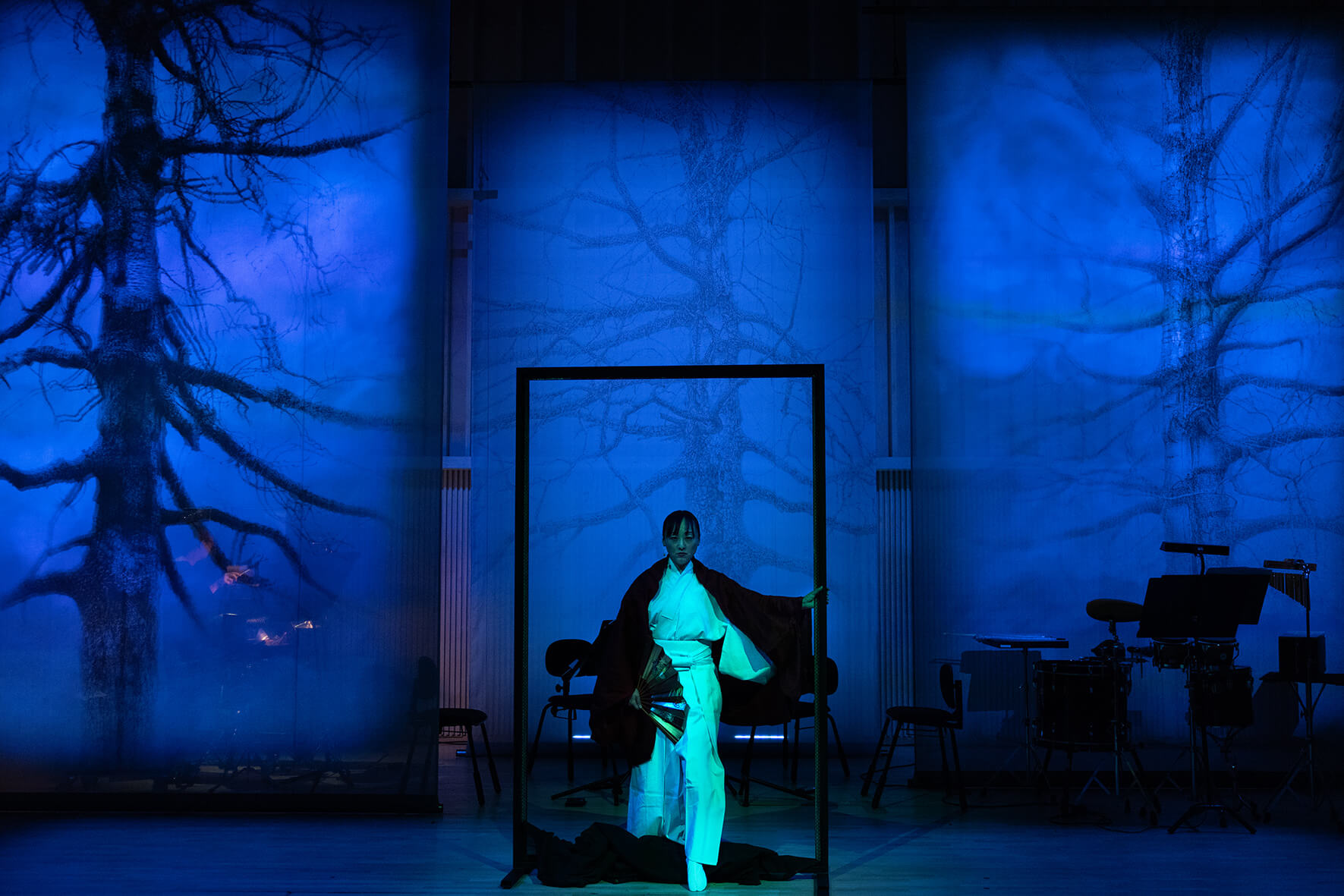
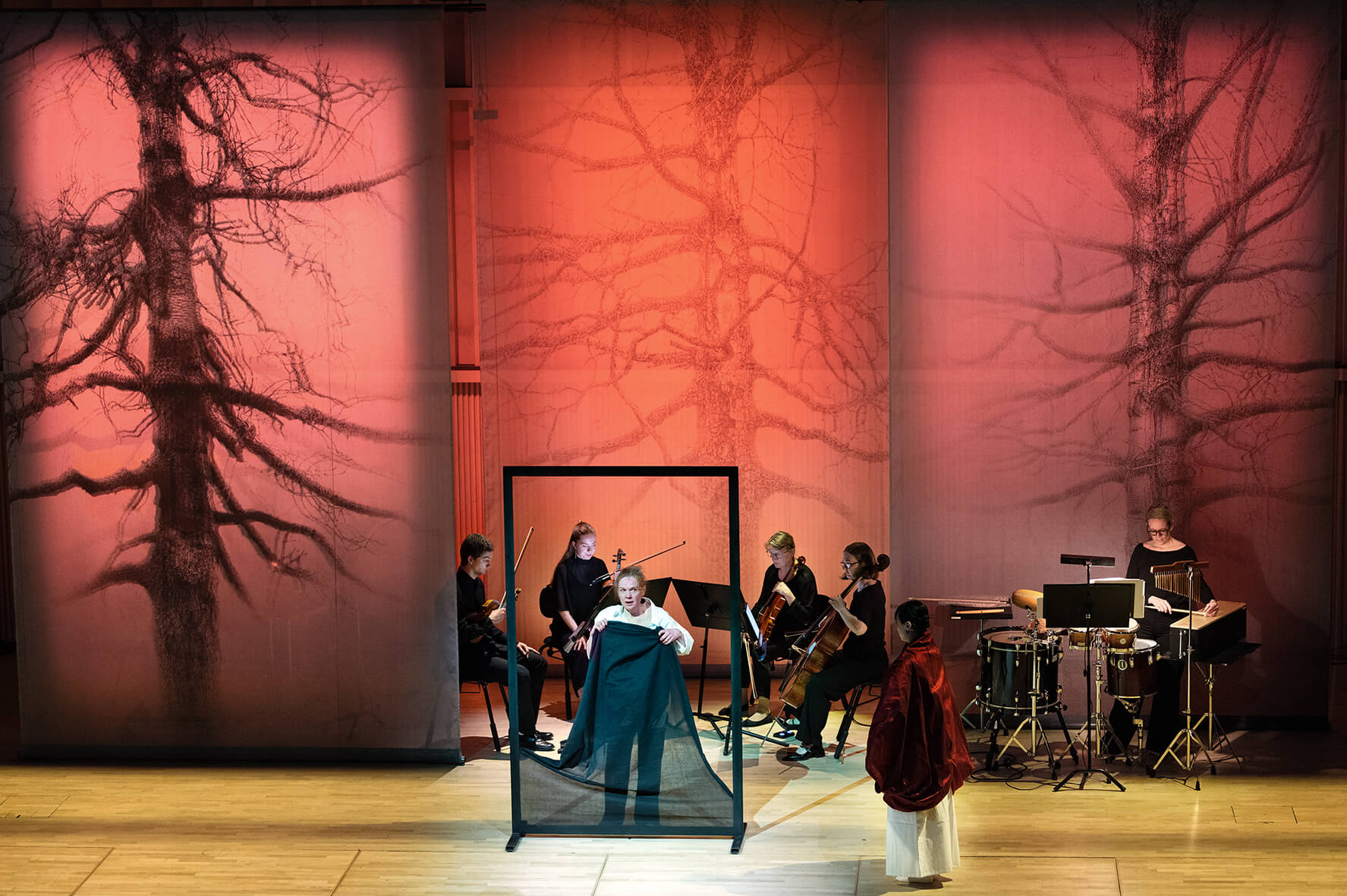
In The Woman on the Sixth Street, the Nō character Lady Rokujō, abandoned by her lover, appears both in her original form and as a woman of our own time. These mirrored versions of the role are performed by Noh singer Ryoko Aoki and actress Petriikka Pohjanheimo.
Team
Music
Noriko Baba, Toshio Hosokawa, Juha T. Koskinen
Paintings
Yuichiro Sato
Dramaturgy & Stage Direction
Aleksi Barrière
Lighting & Scenography
Étienne Exbrayat
Nō performer
Ryoko Aoki
Actor
Petriikka Pohjanheimo
Ensemble
Avanti! Chamber Orchestra
Program
Juha T. Koskinen (*1972)
Prologue (to all stories)
Libretto by Aleksi Barrière
Noriko Baba (*1972)
Hagoromo Suite
Text from the play Hagoromo
Toshio Hosokawa (*1955)
Silent Flowers
Juha T. Koskinen
The Woman on the Sixth Street
Libretto by Selja Ahava, based on the plays Aoi no Ue and Nonomiya and Murasaki Shikubu’s Genji Monogatari
Pictures

© Maarit Kytöharju
© Maarit Kytöharju
© Maarit Kytöharju
© Maarit Kytöharju
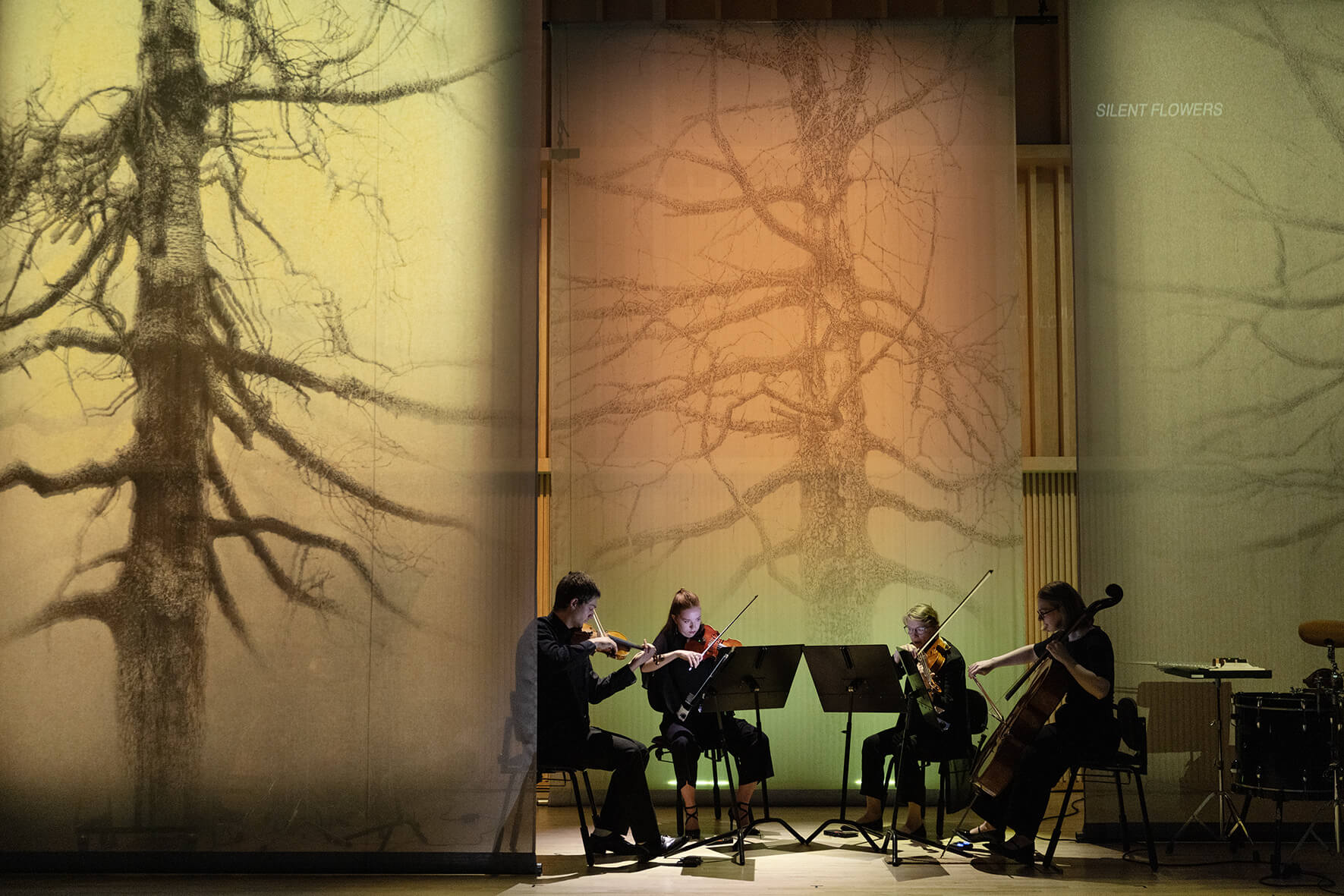
© Maarit Kytöharju
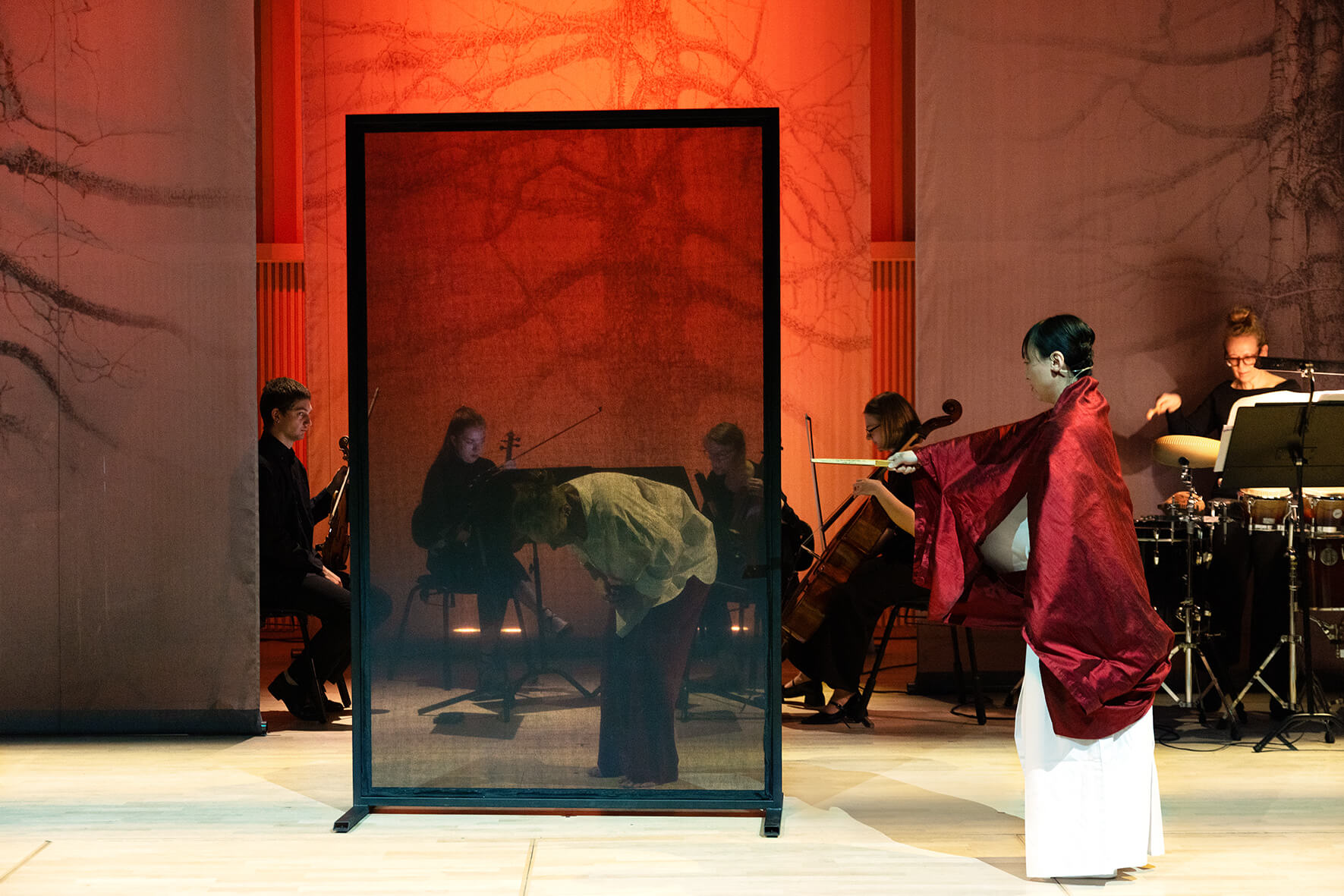
© Maarit Kytöharju
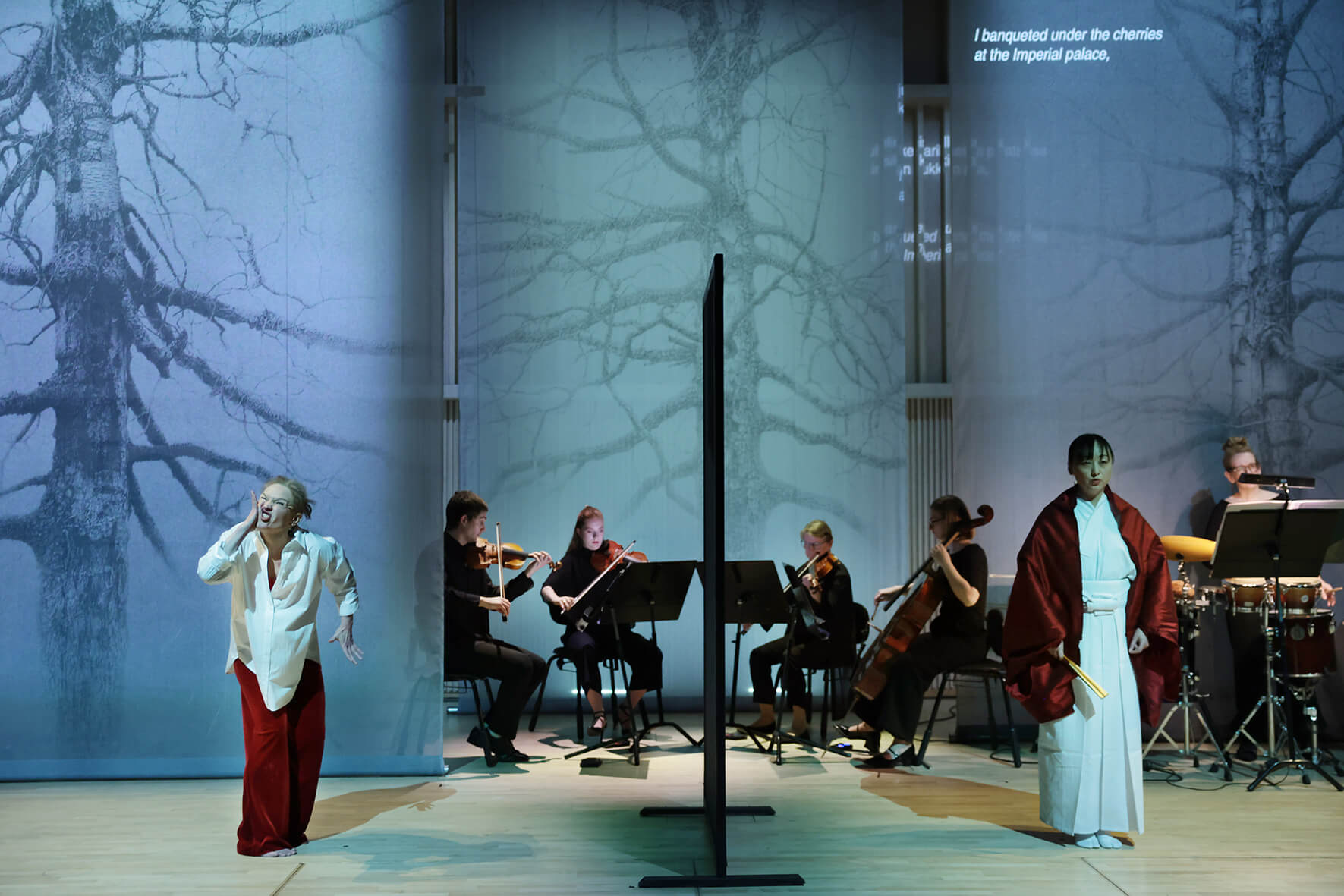
© Maarit Kytöharju
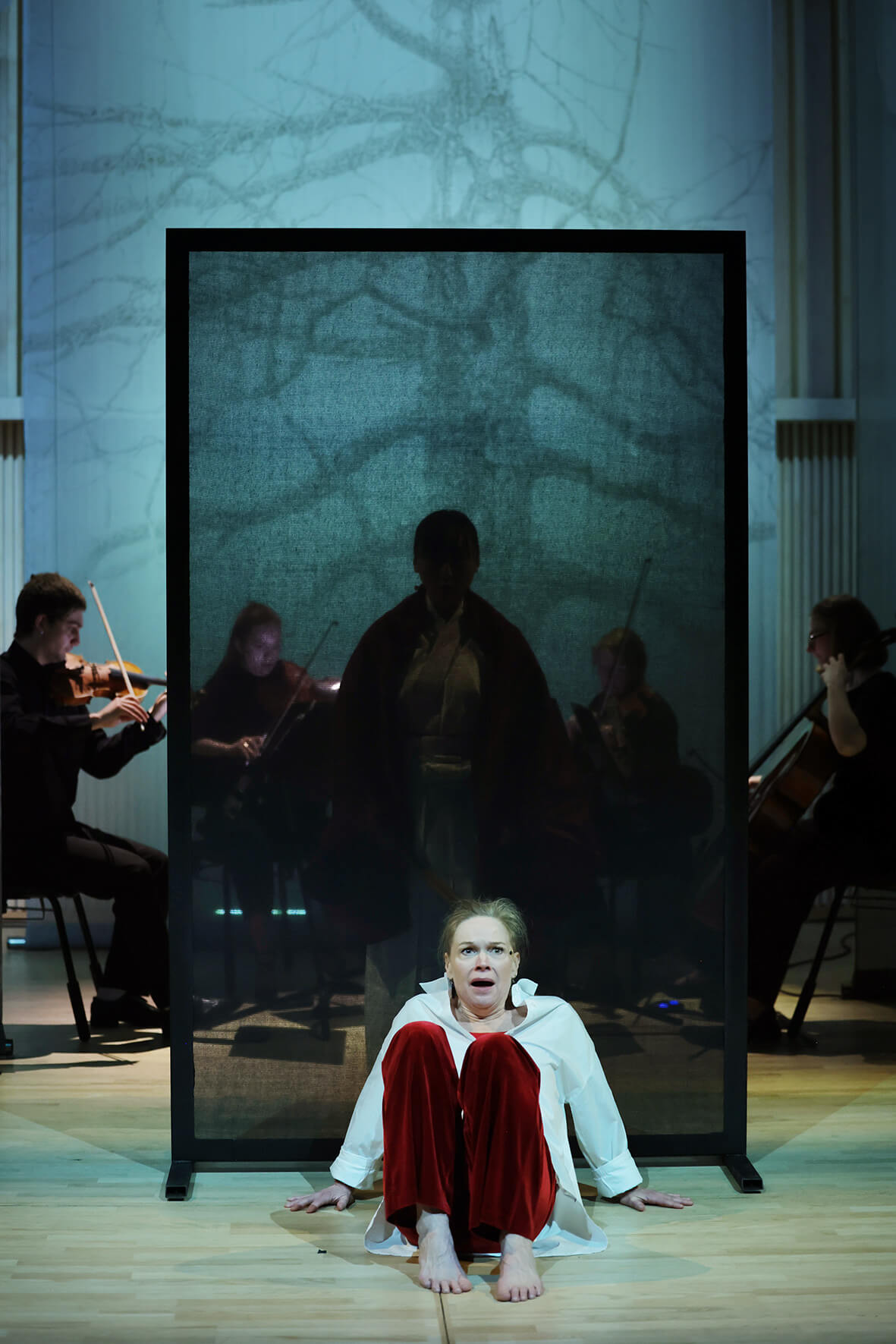
© Maarit Kytöharju
© Maarit Kytöharju
Performance History
April 18, 2026
Tampere-Biennale, Finland (WP)
Echoes
April 2026
“Aleksi Barrière’s staging for Secret Flowers utilizes the traditional means of expression of Nō, but combines them with contemporary influences on the musical and narrative levels. (…) The tale of the tennyō became a way to spark thoughts on female perspectives, and the many variations in which a story can exist in different times and places. (…)
All in all, Secret Flowers was an audacious combination of ancient traditions and present time. To enthusiasts of Japanese aesthetics, the performance offers a seductive experience and an innovative exploration of classical tales. At the same time the works tackle important themes of female experiences.”
JaME – Japanese Music Entertainment
April 2026
“In the performance, the expressive means of Western aesthetics and Nō theatre combined into a hall of mirrors in which narrative archetypes that transcend cultural boundaries faced each other in Aleksi Barrière’s staging and the two new compositions by Juha T. Koskinen, intertwined with the music of Noriko Baba and Toshio Hosokawa. (…)
The main work, Koskinen’s captivating The Woman on the Sixth Street, a chamber drama on a beautiful libretto by Selja Ahava, draws its material from two Nō plays, Aoi no Ue and Nonomiya. Their experiential world is contained in the parts of Lady Rokujō, performed in their original form by Ryoko Aoki, into which are intertwined the thoughts and actions of her contemporary counterpart, channeled by actress Petriikka Pohjanheimo. Using the possibilities of a string quartet and percussions inventively, the instrumental music peeks beyond the words, while the two soloists power the story forward in parallel, in alternation, and in confrontation. Secret Flowers offers a fascinating and noteworthy combination of different forms of expression, both honoring traditions and creating something new.”
Jari Juhani Kallio, Kompositio
April 2026
“The venue was transformed into an atmospheric liminal space between past and present, leaning towards Japan. (…)
This experimental music theatre was framed by a minimalistic stage design of suspended screens supported by subdued lighting – at its center, the dialogue between Petriikka Pohjanheimo’s impressive and powerful contemporary female figure and Ryoko Aoki, who brings her deep knowledge of Nō to the character of an aging woman, and later ghost. (…)
The evening was simultaneously estranged and atmospheric, static with occasional hectic bursts, coalescing into a general impression of mystery.”
Jari Hoffrén, Elementori


