

Noh-opera diptych
Premiere
June 6, 2021
Venue
Bunka Kaikan, Tokyo
Production by Tokyo Bunka Kaikan and La Biennale di Venezia
In collaboration with La Chambre aux échos
“And this world would be a sorry place to dwell in?”
It was in the midst of the First World War that poet Ezra Pound undertook to publish an anthology of translations of noh plays and synopses, the first of its kind in the Western world. For him, it was a matter of bringing to light the work of one of the greatest experts on Japan, the orientalist Ernest Fenollosa, but above all of making a potentially decisive cultural act, in a context that saw the destruction of the great European empires. For Pound, civilizations collapse when words wear out and cultures stop renewing themselves. It is to the art of Translation, and through it to intercultural exchanges, that they owe their survival and development.
The haphazard trajectory of these texts must be imagined in the context of the time: the rescue of the tradition of noh as a living art by the actor Umewaka Minoru, at a time when it was threatened for the first time in five centuries by the collapse of the feudal system on which it depended, allowing Fenollosa to attend performances; Fenollosa’s work with the scholar Kiichi Hirata who, although ignorant of noh, was able to fill in some of the orientalist’s linguistic gaps; the transmission of the manuscripts to Pound by Fenollosa’s widow; the poet’s interest, fueled by the fashion of Japanese prints and the influence of his mentor W.B. Yeats, who sought to reinvent a theatre of occult forces; and finally their – inspiring if not factually enlightening – encounter with the Japanese dancer Michio Itō. A chain of happy accidents and converging interests, and opportunities for misunderstandings. One that came to have a crucial impact on the fascination for noh of all theatrical avant-gardes of the 20th century.
Reaching out to the other, touching the other, remains a major existential issue – of which Only the Sound Remains is, in the twice-repeated difficulty of two beings to meet, in itself a celebration – but we have fortunately come a long way in the last hundred years. Without pretending that prejudices and orientalism are mere things of the past, we now have the possibility of taking Fenollosa and Pound’s ambitions further, and of bringing about a true encounter of cultures, equal and reciprocal. This production of Only the Sound Remains, created in Tokyo, is an attempt at this.
In this endeavor Kaija Saariaho’s music is the best invitation, and facilitator. For forty years, Saariaho has integrated her study of Japanese instruments into her musical practice, and has managed to make them a breeding ground for extended playing techniques and new sounds rather than a simple exotic palette. Her musical language is in itself a way of overcoming the gap between European and Asian traditions, and in Only the Sound Remains it acts as a common language that allows for dialogue. In addition to the reinvention of an ancient form, our Japanese colleagues have recognized and endorsed in this music what they call yūgen: this suggestion of the invisible mystery of the world that beauty brings to the surface without forcing it. Its emblematic figure is the yo’in, a term that concentrates the ideas of resonance (Saariaho’s favorite musical effect, omnipresent in this work), aftertaste, haunting memory, and poetic suggestion, and that was chosen to translate the title of our performance in Japan.
Music was indeed the vehicle for this encounter. Which was due to the open-mindedness of the performers, and in particular of dancer and choreographer Kaiji Moriyama, an experienced reinventor of the traditions of noh, with whom we worked on the interfaces between two musical forms that are also two dramaturgies, to give birth to a new one. Also decisive was the rare delicacy of the conductor Clément Mao-Takacs, the flautist Camilla Hoitenga and the Finnish kantele player Eija Kankaanranta, in their close collaboration with the Japanese musicians, but also in their way of supporting Kaiji’s process from the pit. Finally, the efforts of my assistant Yasuhiro Miura and of the entire team at the Bunka Kaikan in Tokyo were necessary at every stage to maintain an in-depth and fruitful dialogue, and to bring to life the vision that I had with Étienne Exbrayat: that of a staging that interweaves the aesthetics of Noh and the machinery of Italian opera. It bears traces of the milestones of an intercultural history: Jun’ichirō Tanizaki’s lessons in his In Praise of Shadows on the deep roots of the Japanese relationship to space, and the tradition of exchanges that has united the French and Japanese avant-gardes since the 1950s and the Gutai group, in close physical contact with bodies, materials and techniques – in short, drawing on these obstacles that connect us, and that are also at the heart of our approach to music theatre as a creative medum.
It is obviously not a supposed “universal” that emerges in such an encounter of cultures. On the contrary, it is the difficulty, once again centered as a topic, of any encounter and any dialogue. This work, carried out everywhere in the world by artists, as much in the form of interculturality as of interdisciplinarity, is nevertheless as difficult as it is necessary to build a world that is not unified by an overwhelming globalization, but a happier place to dwell in.
Aleksi Barrière
Premiere Team
Concept and Realization
La Chambre aux échos
Music
Kaija Saariaho
Texts
Nohs plays Tsunemasa and Hagoromo
Translated and Adapted by
Ernest Fenollosa & Ezra Pound
Stage Direction, Scenography, Video
Aleksi Barrière
Musical Direction
Clément Mao-Takacs
Lighting, Scenography
Étienne Exbrayat
Choreographer & Dancer
Kaiji Moriyama
Baritone
Bryan Murray
Countertenor
Michał Sławecki
Electronics
Timo Kurkikangas
Vocal Ensemble
New National Theatre Chorus
Instrumental Ensemble
Tokyo Bunka Kaikan Chamber Orchestra
Feat.
Camilla Hoitenga & Eija Kankaanranta
Assistant Stage Director
Yasuhiro Miura
Team in Venice: Same cast, featuring Theatre of Voices and musicians from Secession Orchestra.
Team in Strasbourg: Same cast, Musical Direction by Ernest Martinez Izquierdo, featuring soloists from the Chamber Choir of the Palau de la Música and Quatuor Ardeo.
Pictures

Only the Sound Remains 7 © Koji Iida 2
Only the Sound Remains © Andrea-Avezzù
Only the Sound Remains © Koji Iida 5
Only the Sound Remains © Koji Iida 6
Only the Sound Remains © Koji Iida 3
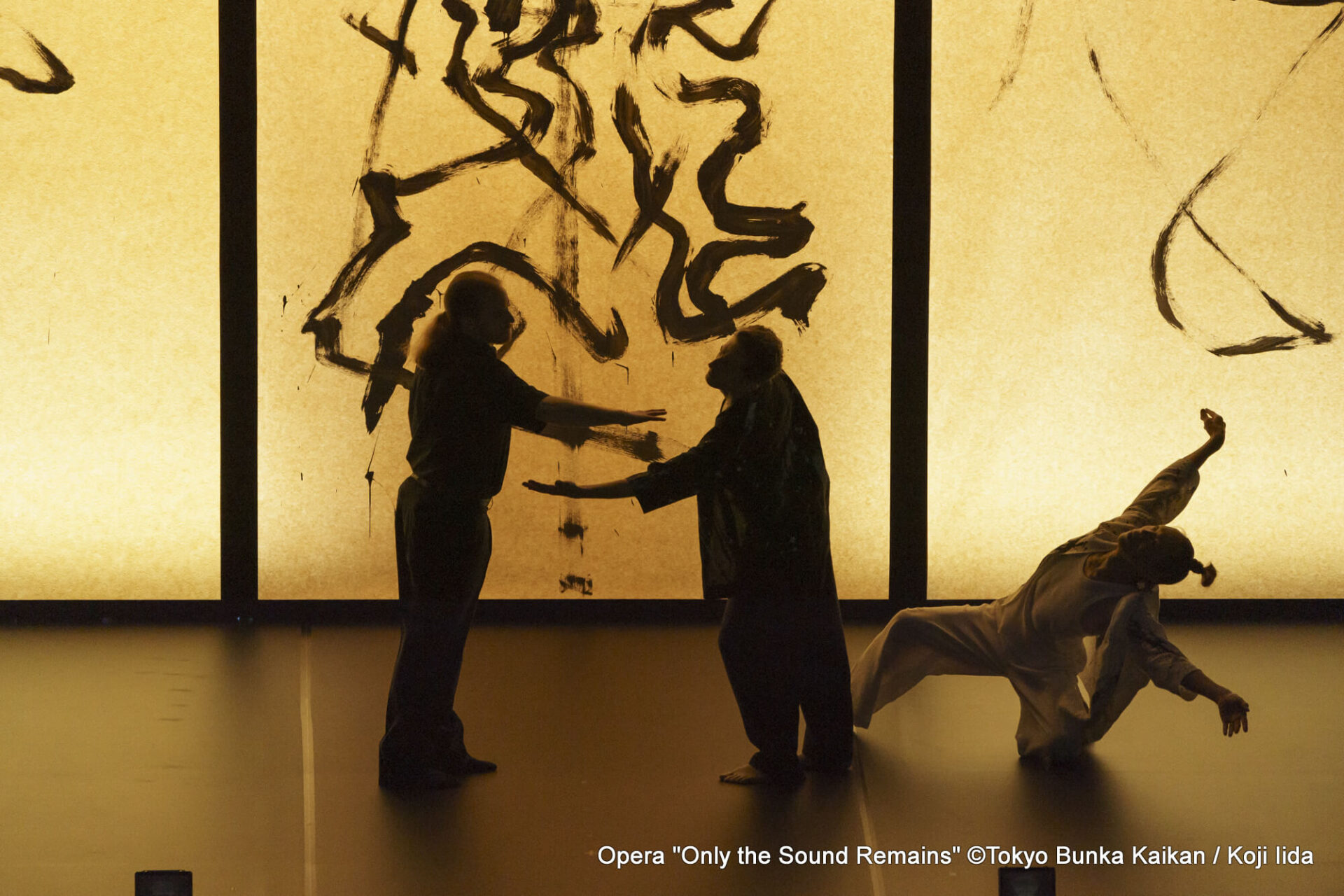
Only the Sound Remains © Koji Iida 4
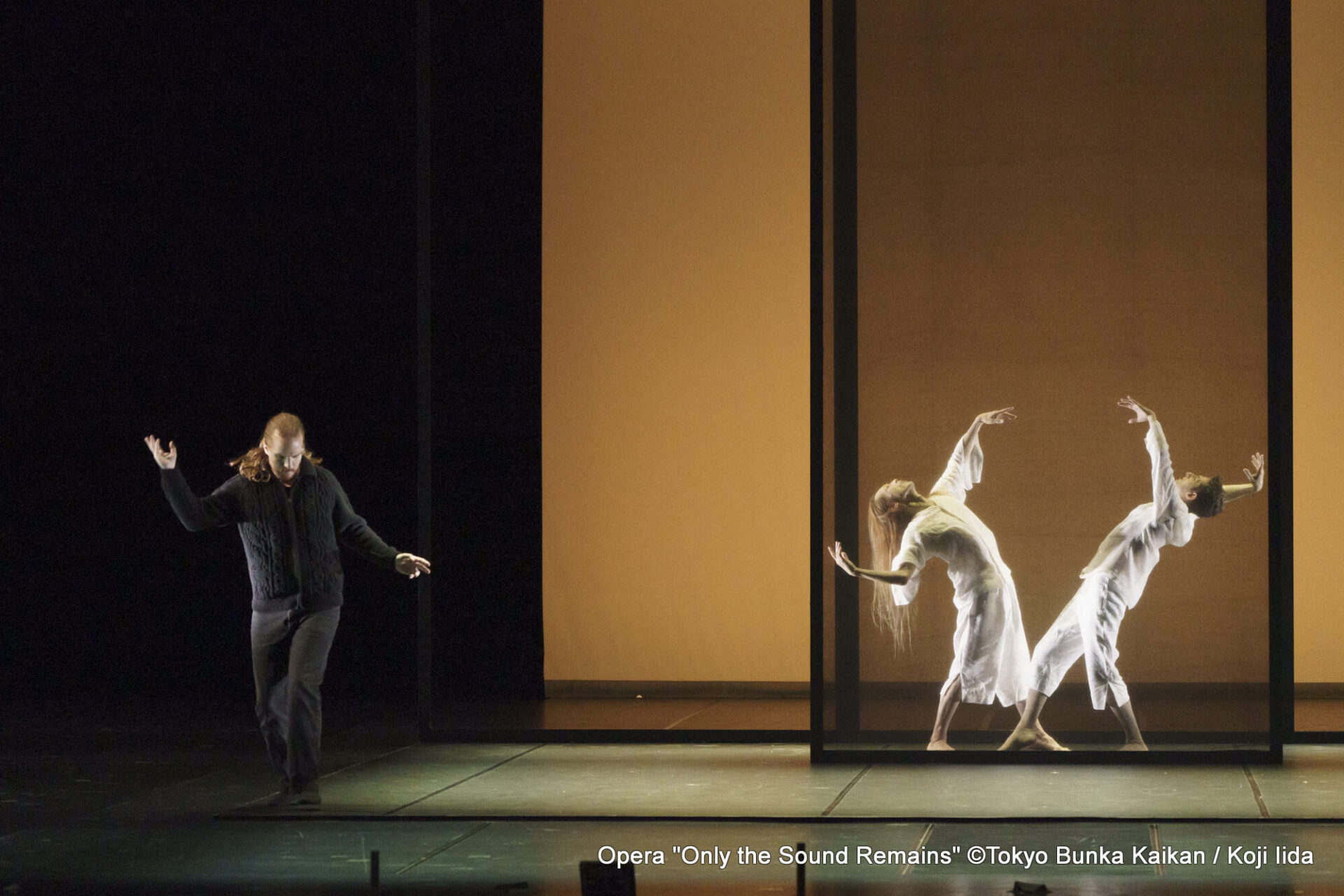
Only the Sound Remains © Koji Iida 2
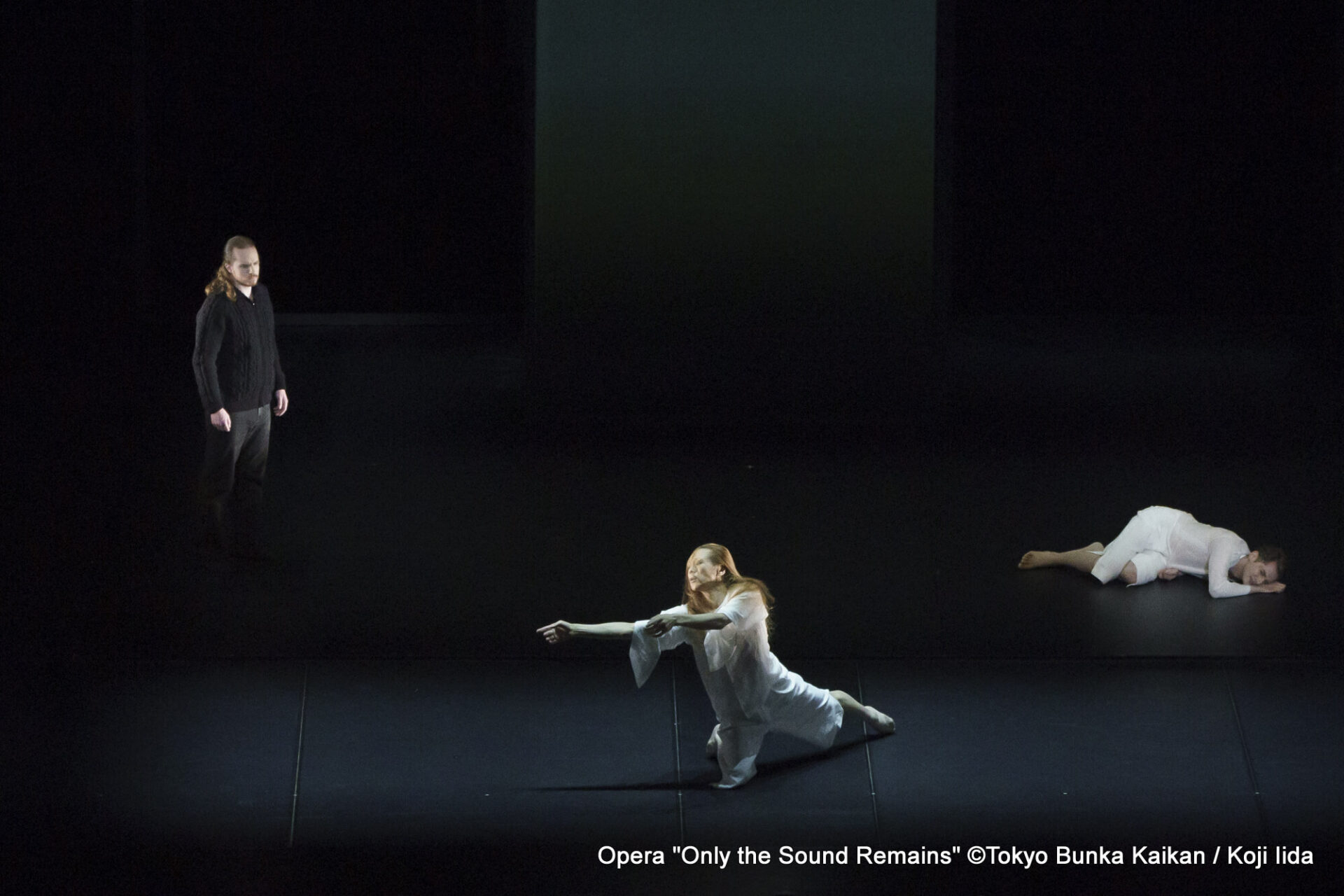
Only the Sound Remains 2 © Andrea-Avezzù
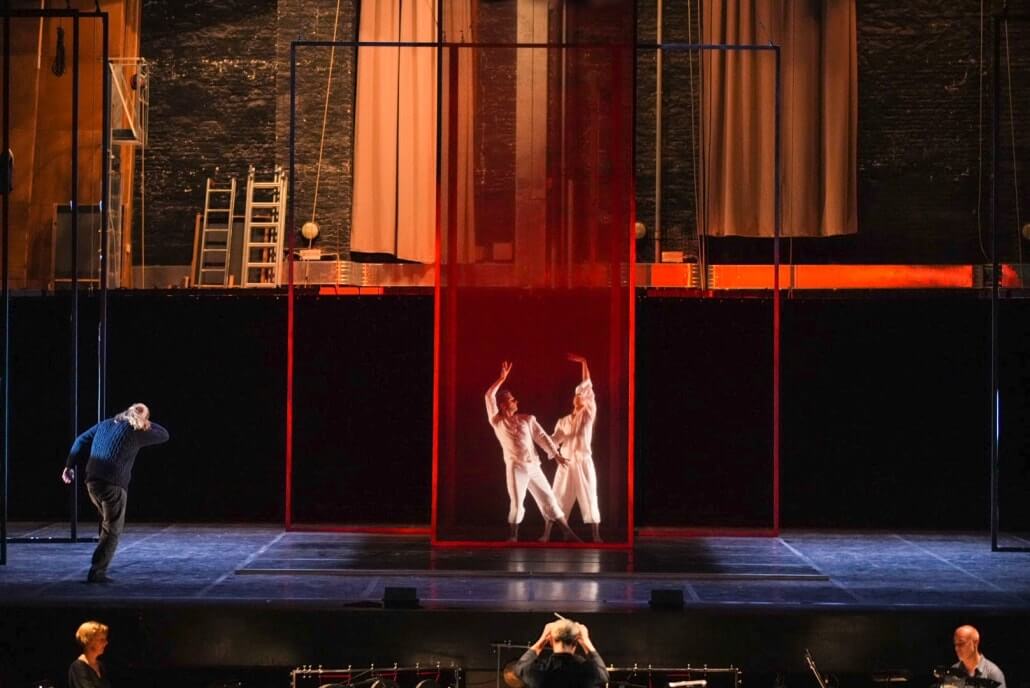
Only the Sound Remains © Koji Iida 1
Performance History
June 6, 2021
Tokyo Bunka Kaikan
September 18, 2021
Biennale di Venezia
September 16 – 18, 2022
Festival Musica, Strasbourg
Echoes
September 2022 (Strasbourg)
“Truly a second life for this beautiful opera.”
Laurent Vilarem, Journal de la création de France-Musique
September 2022 (Strasbourg)
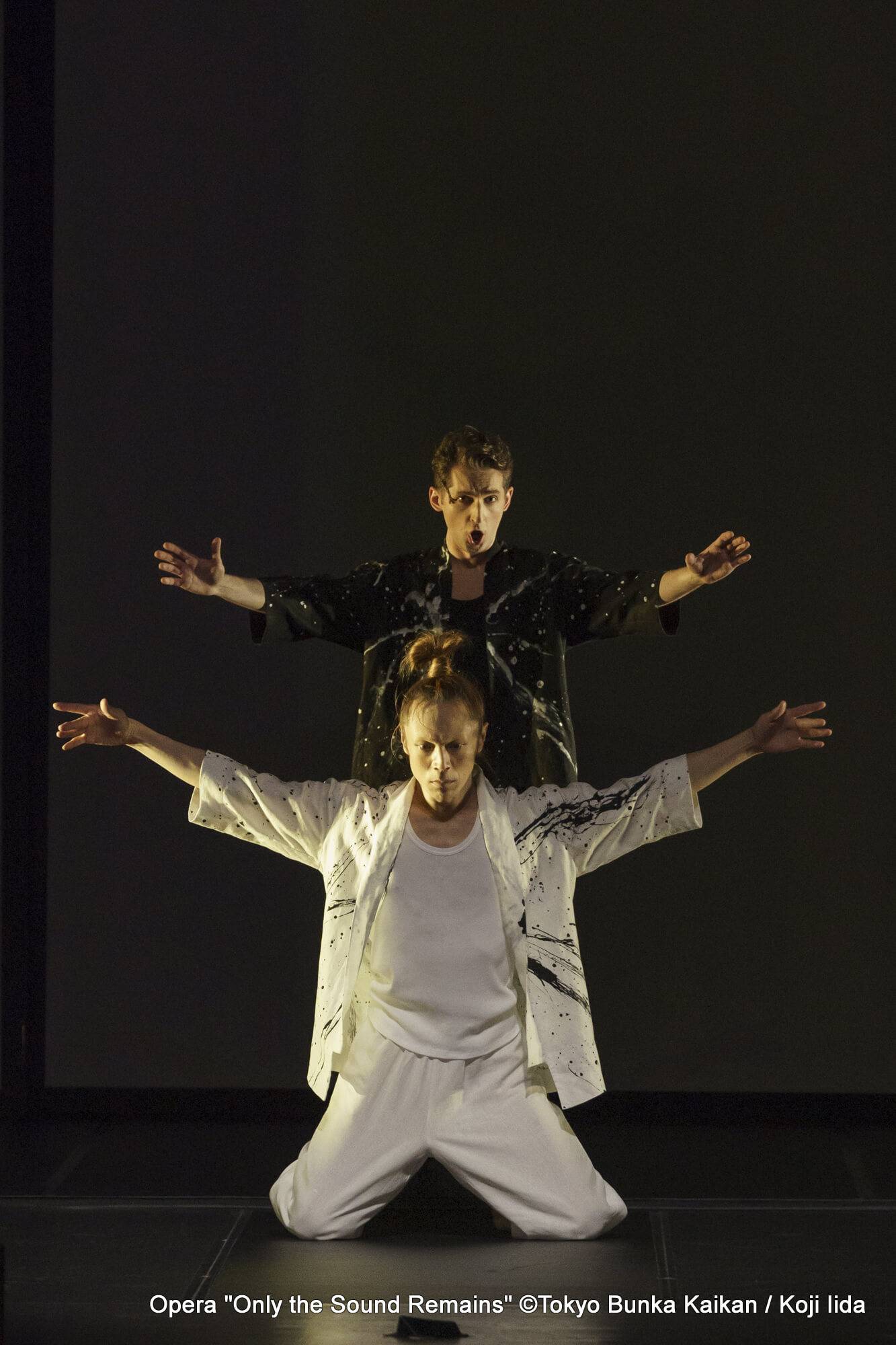
“It is precisely because it finds the right balance between East and West, theatre, dance and video that [the show directed by Aleksi Barrière] captivates us. (…) the dancer and choreographer Kaiji Moriyama achieves a true osmosis with the singers during a breathtaking finale. (…) With its timelessness and great musical and thematic richness, this Only the Sound Remains is not done making us dream…”
Laurent Vilarem, Opera Online
September 2022 (Strasbourg)
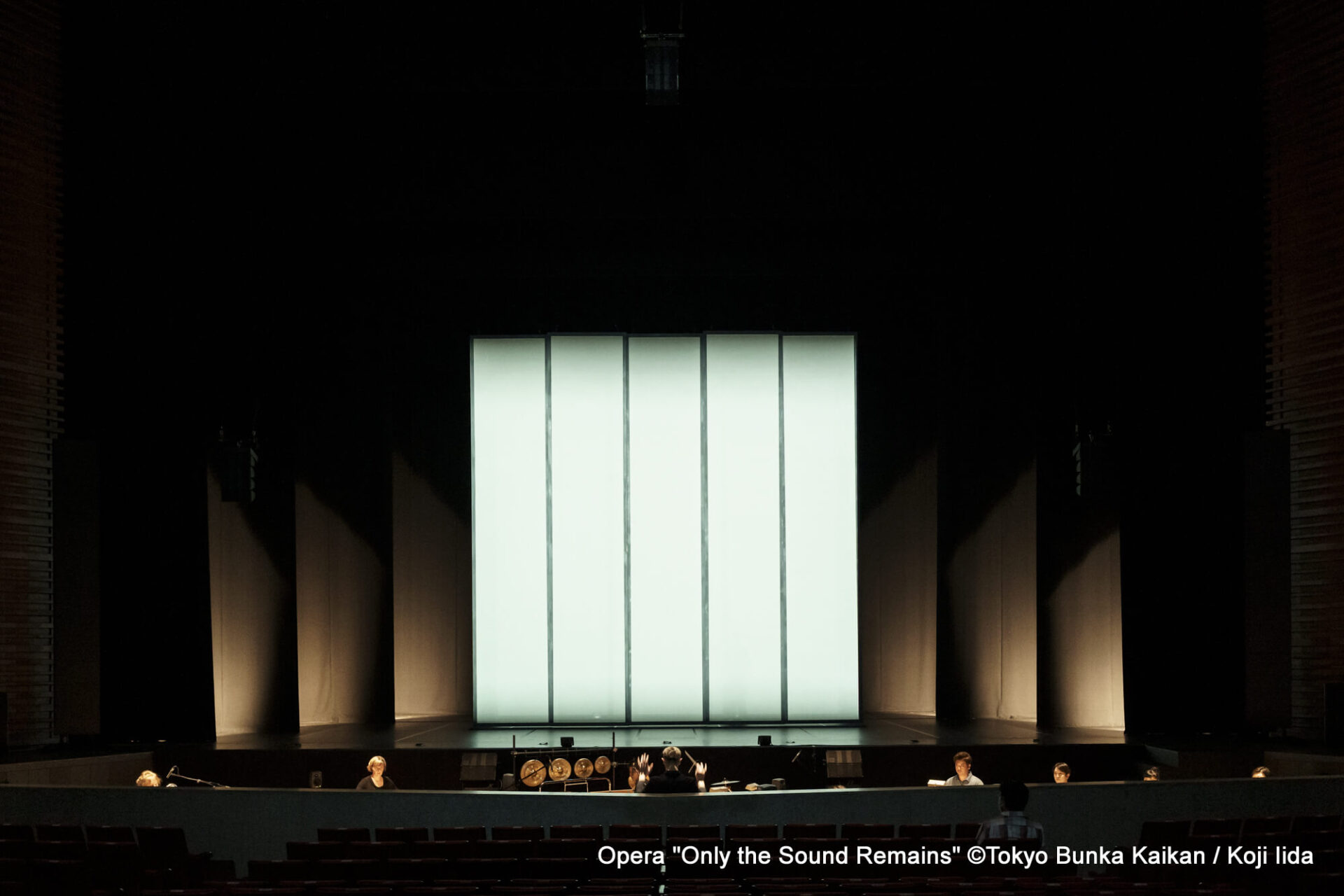
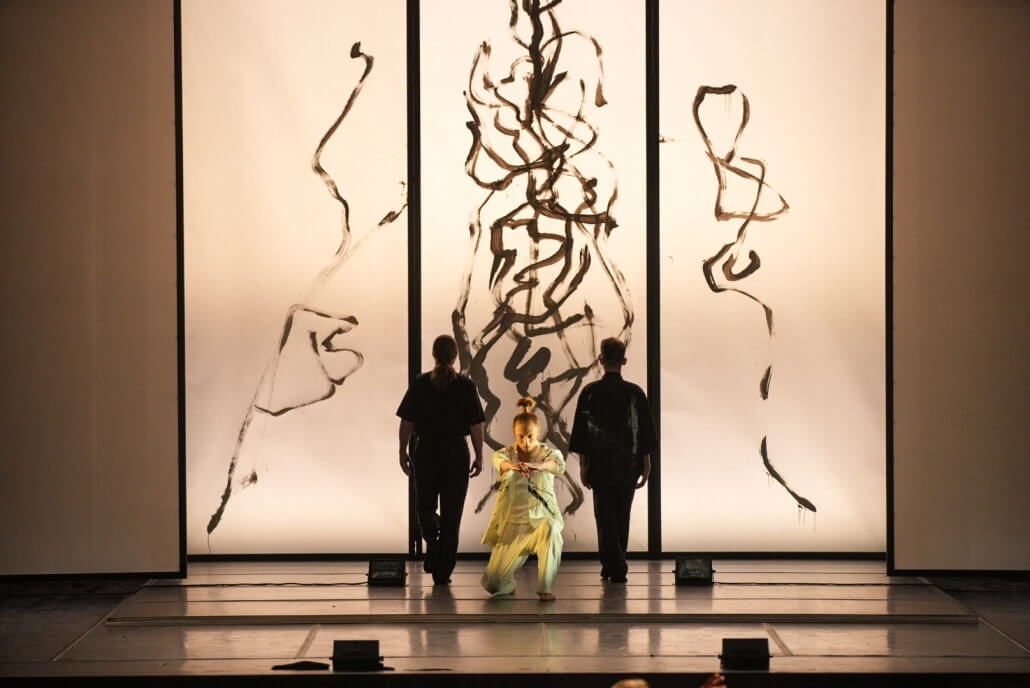
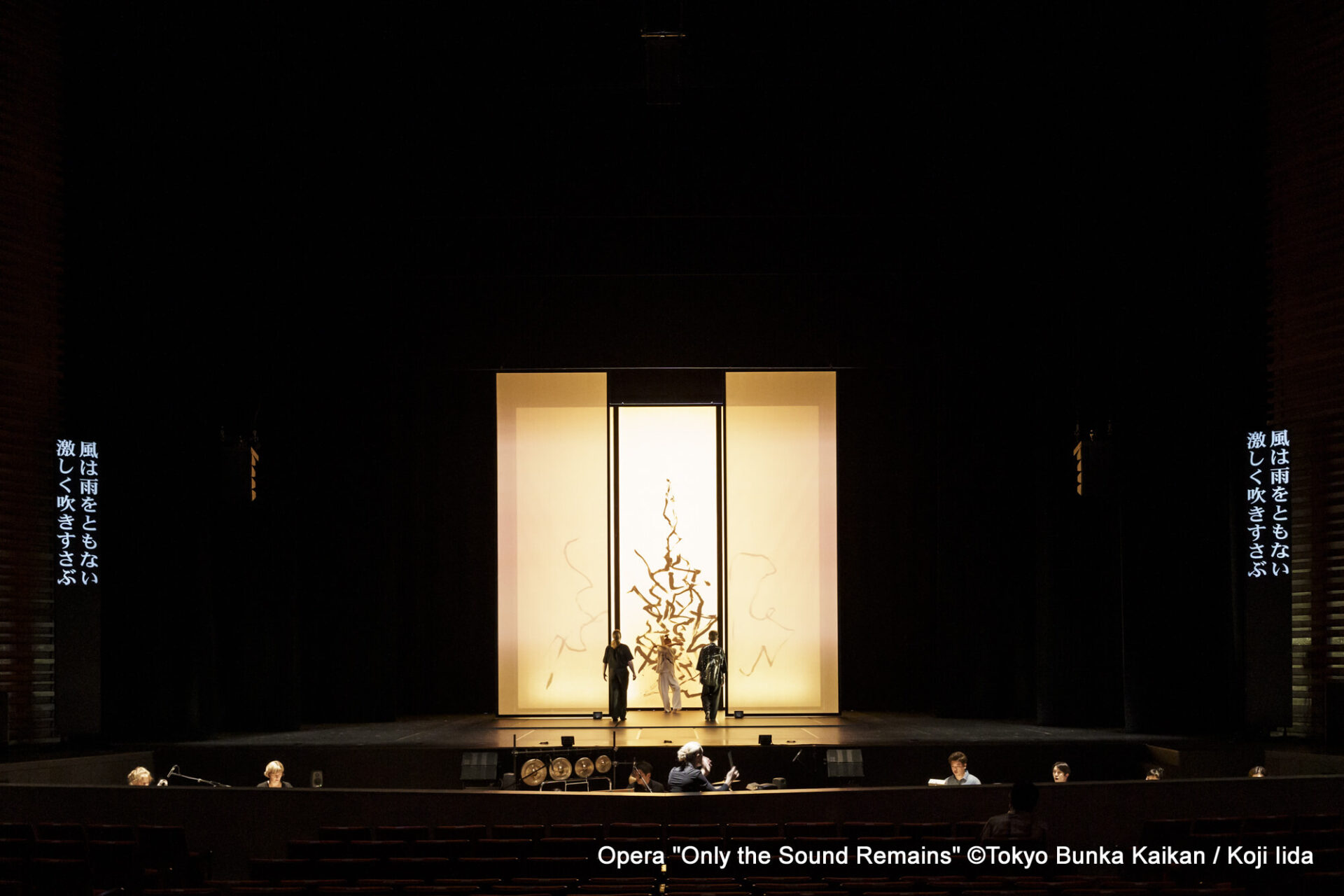
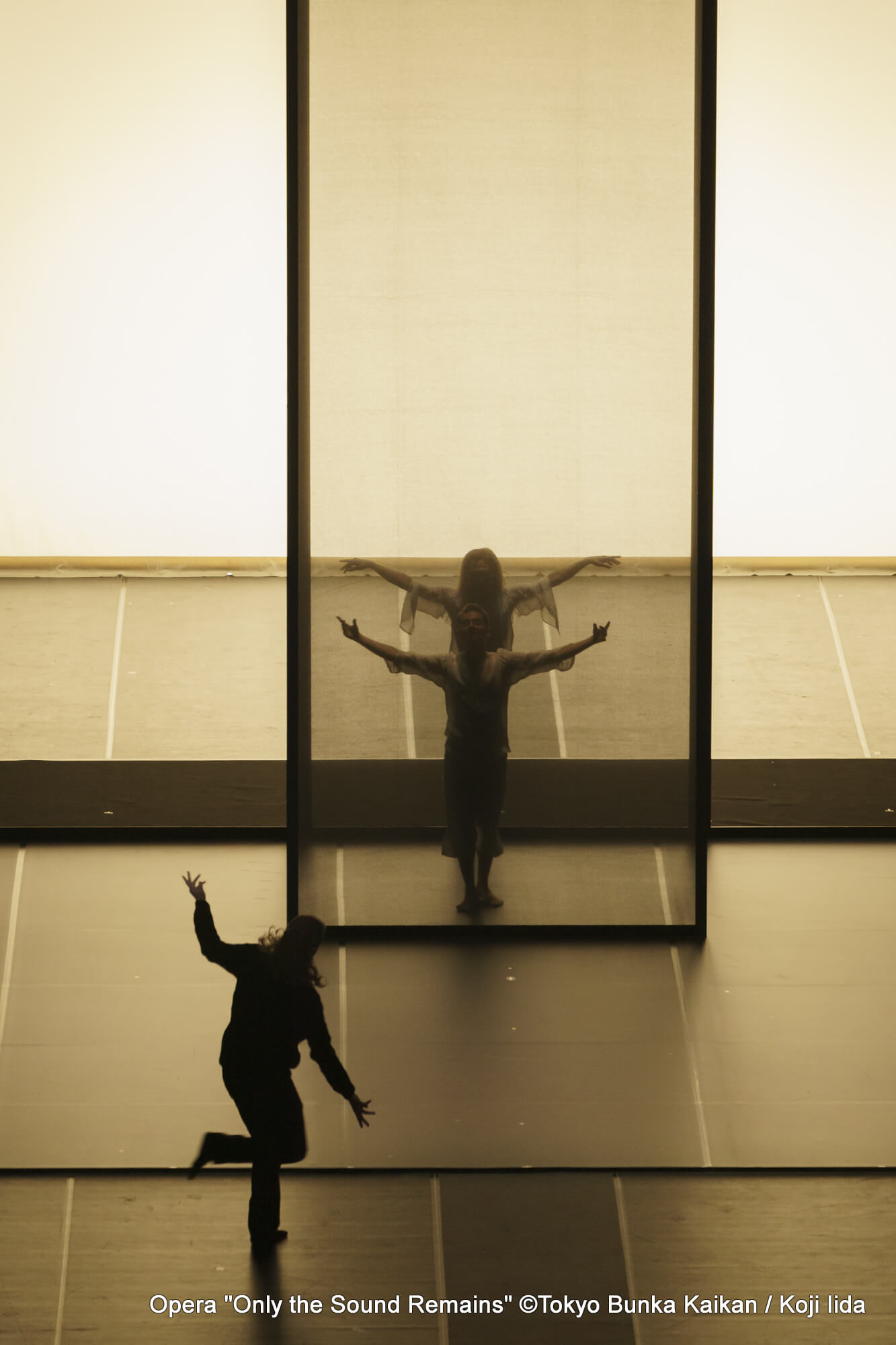
“Aleksi Barrière (…) succeeds, with the complicity of Étienne Exbrayat, in making the magnificent writing of the voices transparent. (…) In this case, clearly, less is more: vertical moving panels, stylized costumes and a visible lighting rig that becomes part of the visuals on stage right and left, bring the spectator into a state of receptivity as much as visual delight. The play of overlapping shadows opens up, even in the darker first part, transparent perspectives. If this is an encounter between East and West, it is rather under the tutelage of Victor Segalen, the enjoyment of a co-presence, confirmed in the surtitles by the juxtaposition of kanji to their French translation, rather than in a fantasy of fusion.”
Pierre Rigaudière, Diapason
September 2022 (Strasbourg)
“The reflections of things [described by Tanizaki] are hunted by both Saariaho’s music, through its fine textures, often blurred by electronics, and the scenography of the two accomplices, Aleksi Barrière and Étienne Exbrayat: a system of moving panels that continually reconfigure the space and lighting (Étienne Exbrayat) that plays with shadows, transparency, and the ephemerality of forms, in the purity of the gesture and stretched-out time. (…) One is seduced, captivated by this deeply coherent production, whose music penetrates the mind and the form through its shimmering textures and the mysterious power of its timbre.”
Michèle Tosi, ResMusica
Septembre 2021 (Venise)
“A dazzling European premiere. (…) The stage is occupied in a minimalist manner by director Aleksi Barriere, with five moving fabric panels evoking the sliding doors of Japanese houses, on which the shadows of the priest and the ghost meet from the front and the back. The lighting effects are of a mystical rigor. (…) Conductor Clément Mao-Takacs, a specialist of today’s music familiar with the work Saariaho, directs the musicians with assertiveness and energy.”
Helmut Pitsch, Opera Online
Septembre 2021 (Venise)
“Saariaho’s music once again has the power to involve us, gradually enveloping the listener in a labyrinth of sound inventions that, in their apparent simplicity, reveal structures as complex as they are intelligible. (…) The show conceived by Aleksi Barrière and Étienne Exbrayat works by subtraction – in full respect of the precepts of noh –, exalting through the almost extreme essentiality of the stage elements a rarefaction of movement capable of suggesting without describing. Kaiji Moriyama’s choreography is very effective, and he is also an intense performer. Clément Mao-Takacs conducts with contagious energy, drawing the music with gestures that sometimes resemble those of a paintbrush on rice paper, tracing sound ideograms. (…) Enthusiastic success for all the parts, and a standing ovation for Saariaho.”
Alessandro Cammarano, Le Salon Musical
Read Aleksi Barrière’s article on noh and contemporary operaa (EN):

