

A Parable
Premiere
August 31, 2023
Venue
Espoo Cathedral, Finland
Production by the Urkuyö ja Aaria Festival
In collaboration with La Chambre aux échos
“With silence every room was full,
Full of his absence,
Roaring like the sea!”
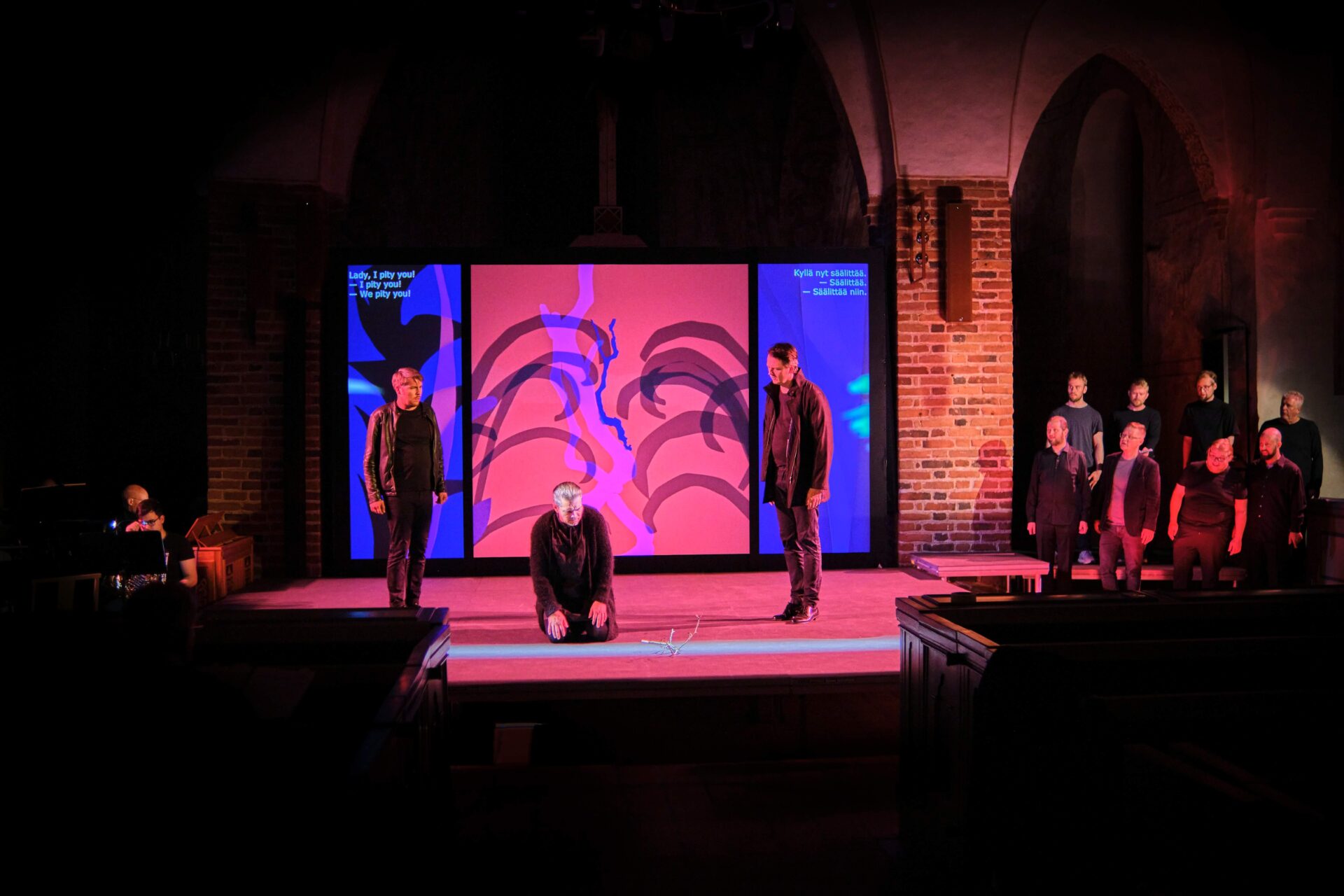
Curlew River opera tells a story of loss and grief, dedicated to “the fallen, the lost, the least.” A group of people gather in a church to present a parable about a mother who has lost her sanity and searches around the country for her missing son. Her wanderings lead the mother to the banks of the Curlew River – where she finds her son’s tomb, turned into a local shrine. The community who derided the mother learns how to understand her pain and guide her through it. Benjamin Britten lived outside of the Church and its rituals, but composed many operas and choral works to be performed specifically in churches. Here he took his inspiration from a Japanese nō play called Sumidagawa, from which he made a ‘translation’ into a medieval church parable.
Like many Western theatre-makers over the last century, I have long been interested in nō theatre, and have sought to deepen my relationship with it in my own work. In 2013, I directed a double performance of Gustav Mahler’s Kindertotenlieder in two versions, first placing the songs about the loss of children in the months following a school shooting, and then continuing the chronology of mourning with a second performance of the songs, this time set against a nō-inspired dance by puppeteer (and student of nō in Japan) Claude Jamain. In the spring of 2021, I was invited to direct Kaija Saariaho’s opera Only the Sound Remains, based on two English adaptations of nō plays, in Tokyo and in collaboration with Japanese choreographer Kaiji Moriyama. (Both performances were created in collaboration with conductor Clément Mao-Takacs.) I am also currently working on a new work with an exciting trio of artists: composer Juha T. Koskinen, writer Selja Ahava, and nō actress Ryoko Aoki, who will collaborate on a new opera that interweaves musical and narrative traditions in a new way.
What is it about nō, a Japanese art form dating back to the 13th century, that creates such an attraction? Everyone has their own answers. Western interest in nō has been a times purely technical, seeking to extend the means of theatre and music, for example through slow movements, ritualism, or masks. Sometimes it has focused on the psychological, or mythological dimensions of nō, or even more esoterically on its ways of opening a conversation with demons and the dead. Such has been the influence of the nō on the European avant-garde, that its features may no longer be recognized as such in one’s own work.
Benjamin Britten and William Plomer’s opera Curlew River (1964) is part of this tradition and encapsulates the issues it raises. Britten experienced the classic play Sumidagawa in Japan in 1956, was deeply impressed by both the subject and the form, and first considered using its English translation as the libretto for a new opera. However, the authors gradually realized that the project was becoming an exotic pastiche that would not respect the original source. Their solution was to draw inspiration from their own culture, from medieval mystery plays, and to translate the story into a local setting, albeit in the form of an ancient parable. This allowed for the inclusion of the features that interested Britten, including a small ensemble, cross-dressing, a chorus that contributes to the story while commenting on it from outside, a compositional style that adopts certain harmonies of nō music, and heterophonic counterpoint, where voices can overlap without the need for precise synchronization.
In terms of form, these solutions reveal the first thing Britten discovered in the nō tradition: the possibility of renewing or actually inaugurating a chamber opera tradition. Britten set up his own opera company and festival in the 1950s in order to create opera on his own terms, but the material conditions called for a smaller scale and therefore also required the invention of a new form, so that chamber opera would not merely be the poorer version of an art form designed for large stages. Britten’s work on chamber opera in East Anglia was not opportunistic or exploitative: the young composer wrote music tailored for those small halls and churches, and in which the audience was often involved. The medieval mystery, which was then re-emerging as a folk tradition, turned out to be an excellent model for this – a high art that is rooted in a community, yet looking outwards. Since Finland, in particular, has a particularly strong and active tradition of chamber opera and summer festivals, it is an interesting place to re-explore Britten’s project.
Nō provides Britten – and all of us after him – wiith more than just formal solutions. Nō’s most interesting and radical feature in our adrenaline-fueled civilization is to be a form that does not deal with dramatic events, but rather with their psychological and collective consequences. The protagonist is often a troubled ghost or spirit, telling of a past trauma that has not found a resolution. Sumidagawa belongs to a subgenre of plays that deal with the mother’s grief, and is specifically about the process of finding peace and light, of overcoming the pain of an ‘empty bosom.’ In nō, as in medieval church theatre, religion plays a role in the recovery from trauma, and (for those around the grieving subject) in the development of compassion – but it is also presents us with situations where the collective and religious rituals cannot solve everything, calling for other tools – in this music and poetry play a central role. They create a safe space in which everyone can identify with situations, and explore their own feelings and associations, developing a subjective perspective and disagreements.
In translation work, which bears many similarities with stage directing, one speaks of two contrasted attitudes to source material: domestication (bringing closer) and foreignization (maintaining or even reinforcing distance). This is not a binary choice, but a constant calibration – pure foreignization leans into exoticism or makes identification impossible, while mere domestication negates the qualities of the original text and thus the challenges of otherness. How can we approach the Other in a genuine way, respecting the differences that enrich our own reality when we encounter them? This question is a social necessity, and we need culture, among others, to develop a considered and multifaceted response to it.
In this performance we have sought to bring this opera closer to the Lutheran cultural context, which, like Britten’s medieval fantasy, reaches for early Christian directness. As in nō, the starting point here and now (on the banks of the Sumida River, or the Curlew River, or perhaps the Espoo River) allows us to move together from a familiar hill to foreign landscapes: to other voices that are absent in one way or another – absence is the departed’s way of being present; and when we listen intently, in the words of the opera’s so-called ‘Madwoman’, absence is “roaring like the sea.”
So what is the attraction of nō, and what can we learn from it in creating music theatre for our time? The aesthetics of grief and recovery that we miss and need, a collective and intermedial form in which everyone speaks with their own voice and that allows for discussion, and that soft glow in the darkness that can be called a miracle and a mystery. The word nō means skill, and there is an extraordinary amount of skill on stage in this performance. But beyond the interplay of techniques and disciplines, the master and theorist of nō, Zeami Motokiyo (1363 – 1443), expected something even rarer from the performance: the miracle of fragility. The kind that shines through in the strange, eerie wall paintings of the Espoo Cathedral. Next to them is an inscribed reminder: Yet a little while is the light with you. Nō, which is performed at dusk and often ends with the ritual repetition of the name of the Buddha of Light, teaches us how to let light bleed from wounds.
Aleksi Barrière
Team
Concept and Realization
La Chambre aux échos
Music
Benjamin Britten
Libretto
William Plomer
After the Noh play
Sumidagawa by Juro Motomasa
Stage Direction, Scenography
Aleksi Barrière
Lighting, Scenography
Étienne Exbrayat
Video Design
Lucia Schmidt
Madwoman
Tuomas Katajala
Ferryman
Arttu Kataja
Traveller
Aarne Pelkonen
Abbott
Matti Turunen
Spirit of the Boy (voice)
Onerva Merikanto
Spirit of the Boy (shadow)
Otava Merikanto
Pilgrims (vocal ensemble)
Martti Anttila, Jarno Lehtola, Joonas-Ville Hietaniemi, Juhani Vesikkala, Greggory Haueter, Janne Helekorpi, Antti Villberg, Riku Laurikka
Instrumental ensemble
Antti Tikkanen (viola), Kaisa Kortelainen (flute), Tuomo Matero (double bass), Erno Toikka (horn), Heikki Parviainen (percussion), Katri Tikka (harp), Petteri Pitko (organ)
Pictures

Curlew River 1 © Heikki Nenonen
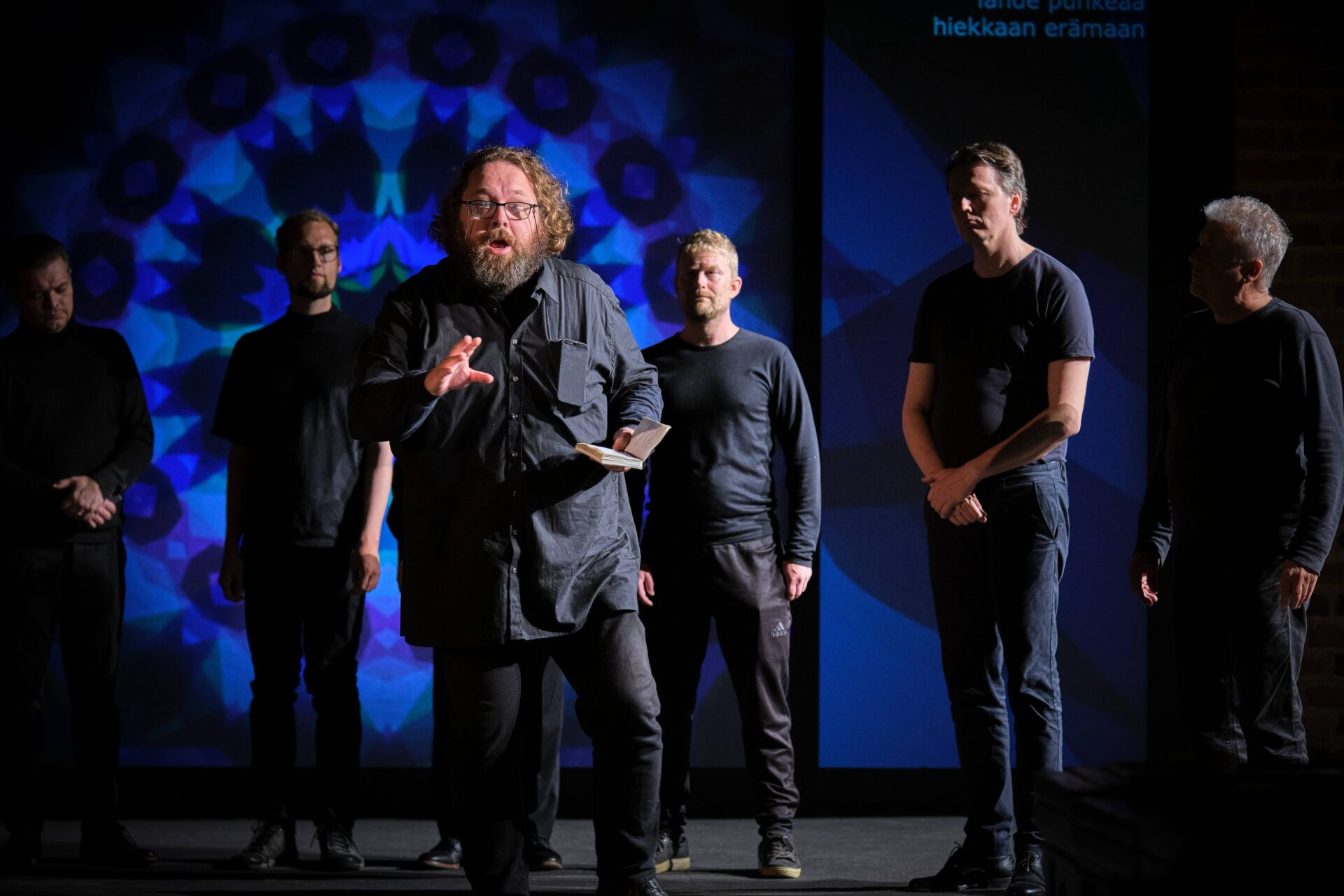
Curlew River 9 © Heikki Nenonen
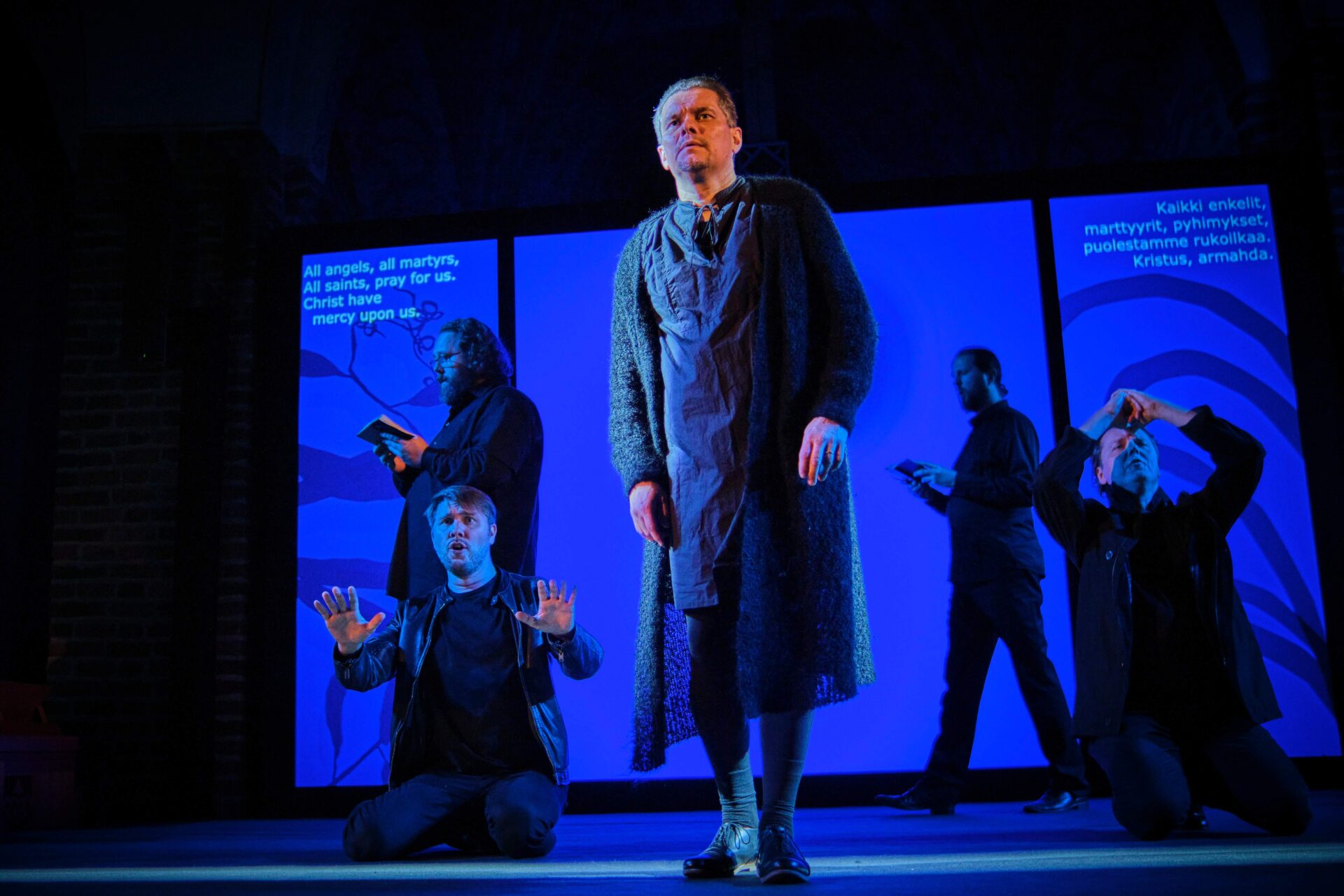
Curlew River 2 © Heikki Nenonen
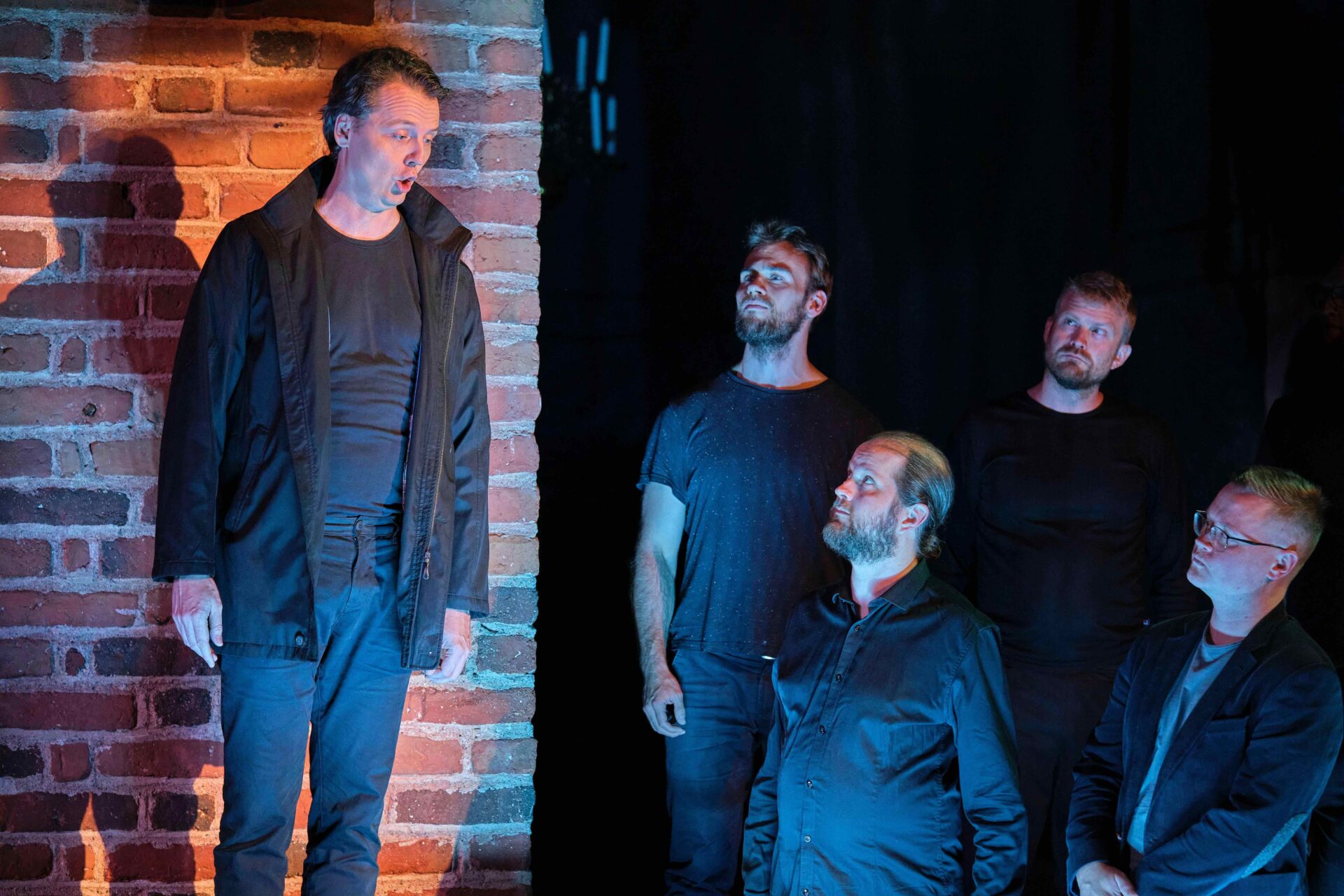
Curlew River 3 © Heikki Nenonen
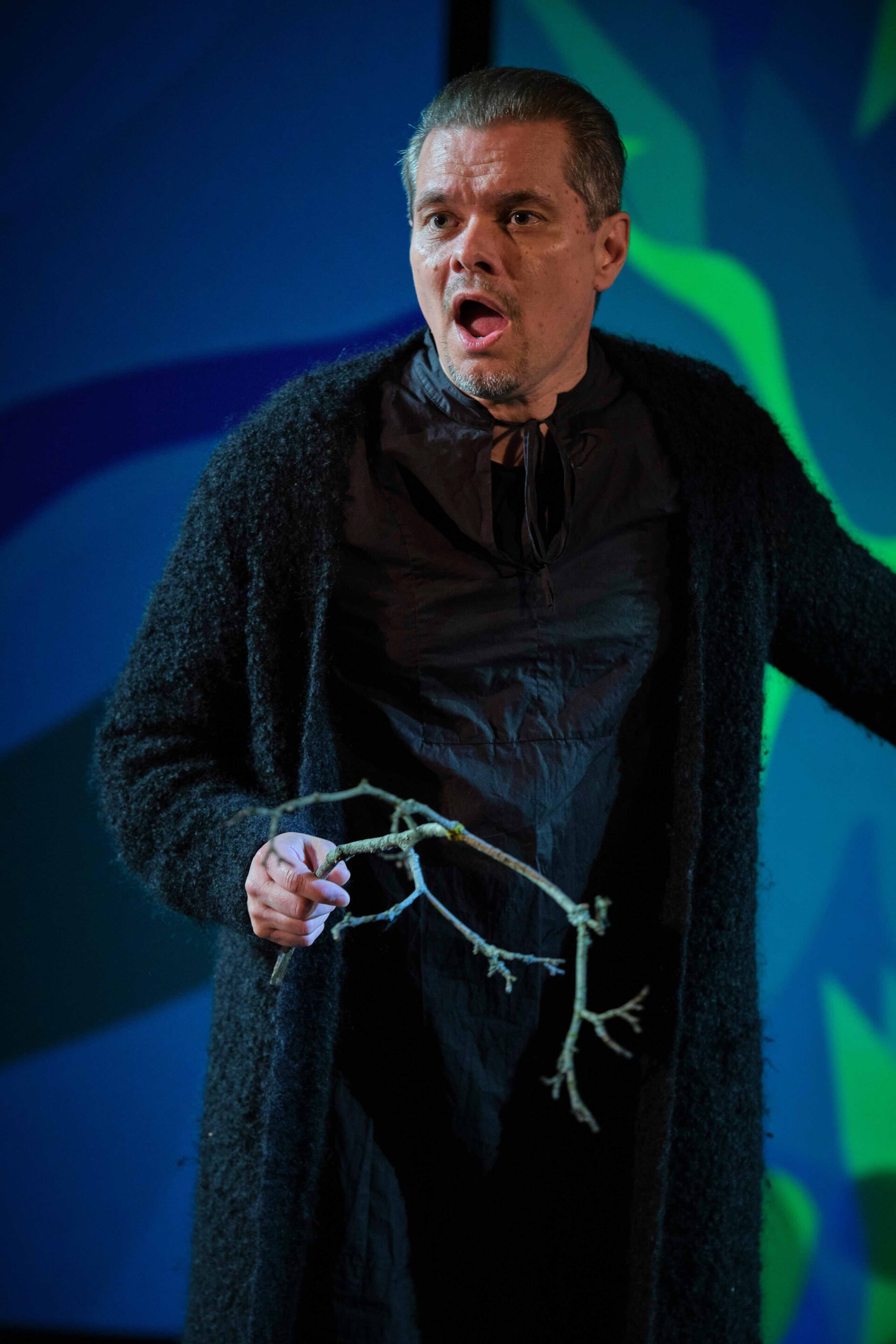
Curlew River 4 © Heikki Nenonen
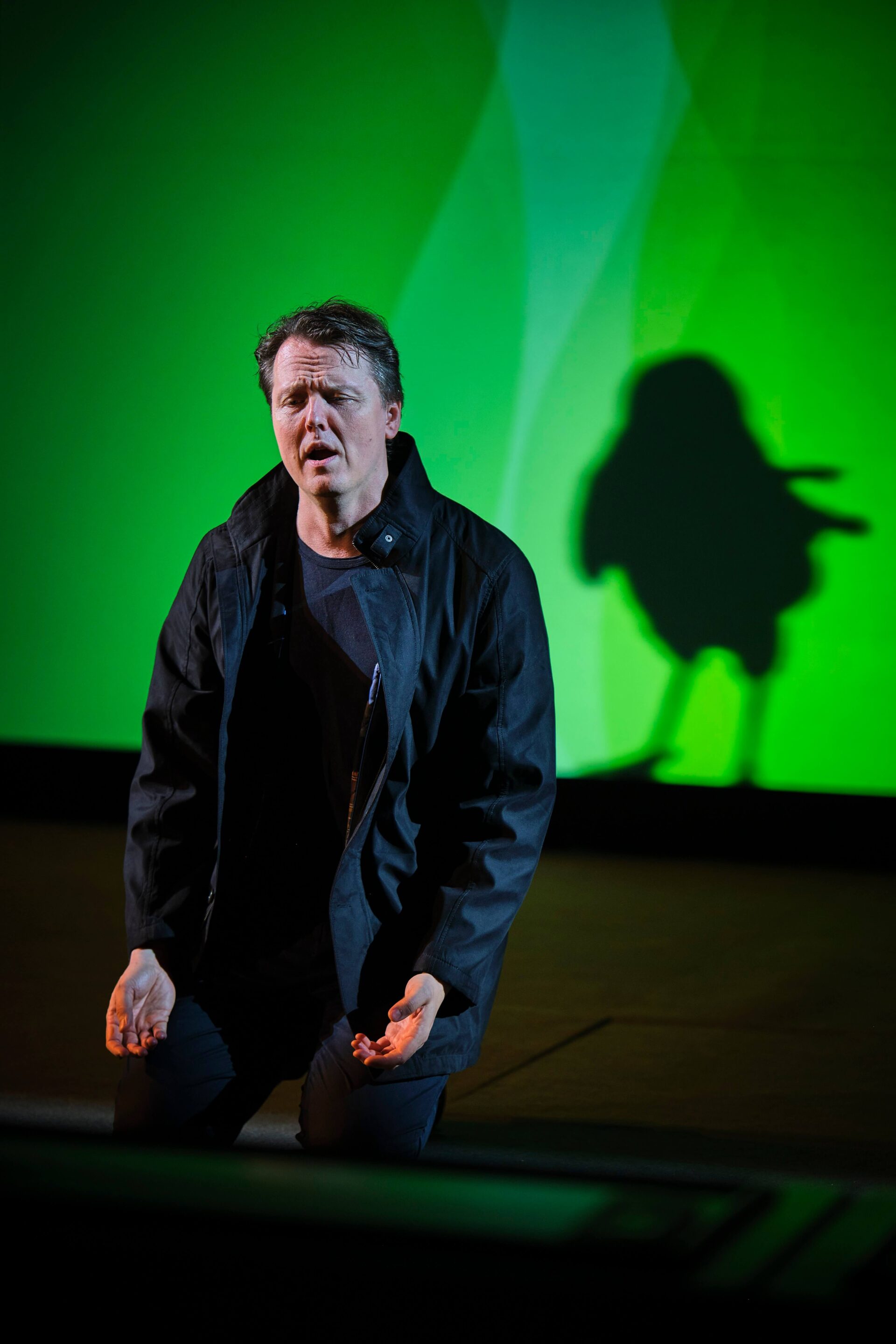
Curlew River 5 © Heikki Nenonen
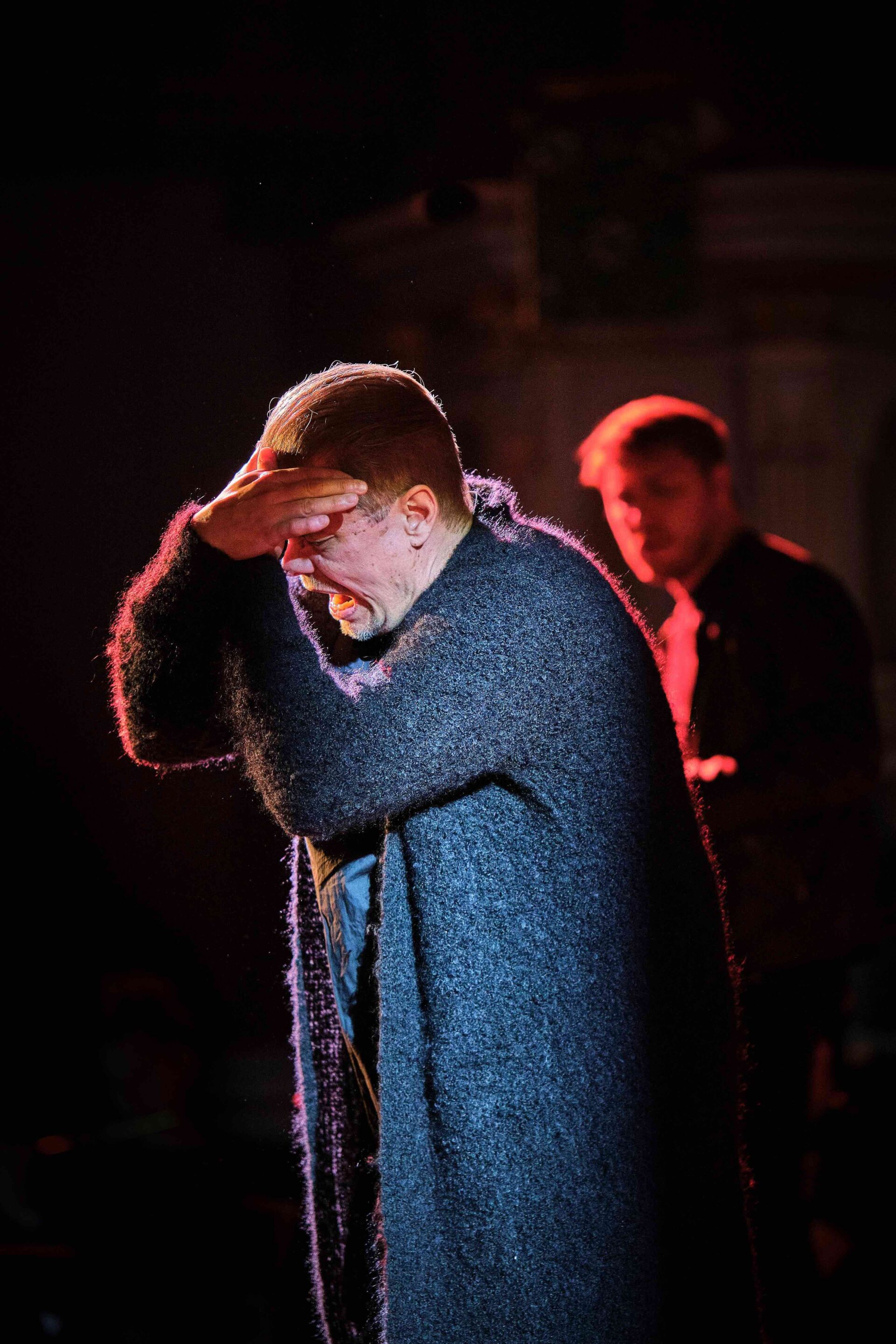
Curlew River 7 © Heikki Nenonen
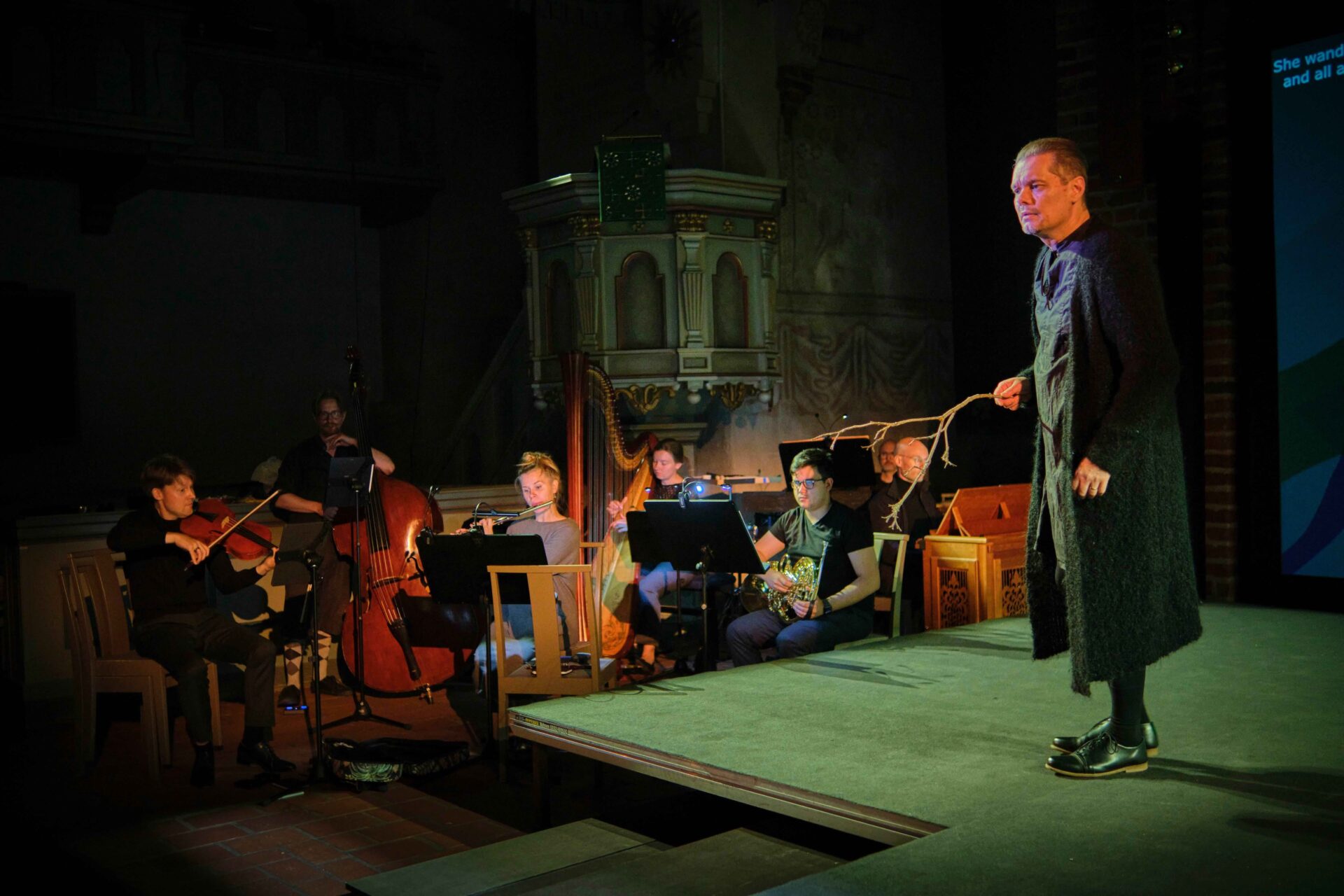
Curlew River 6 © Heikki Nenonen
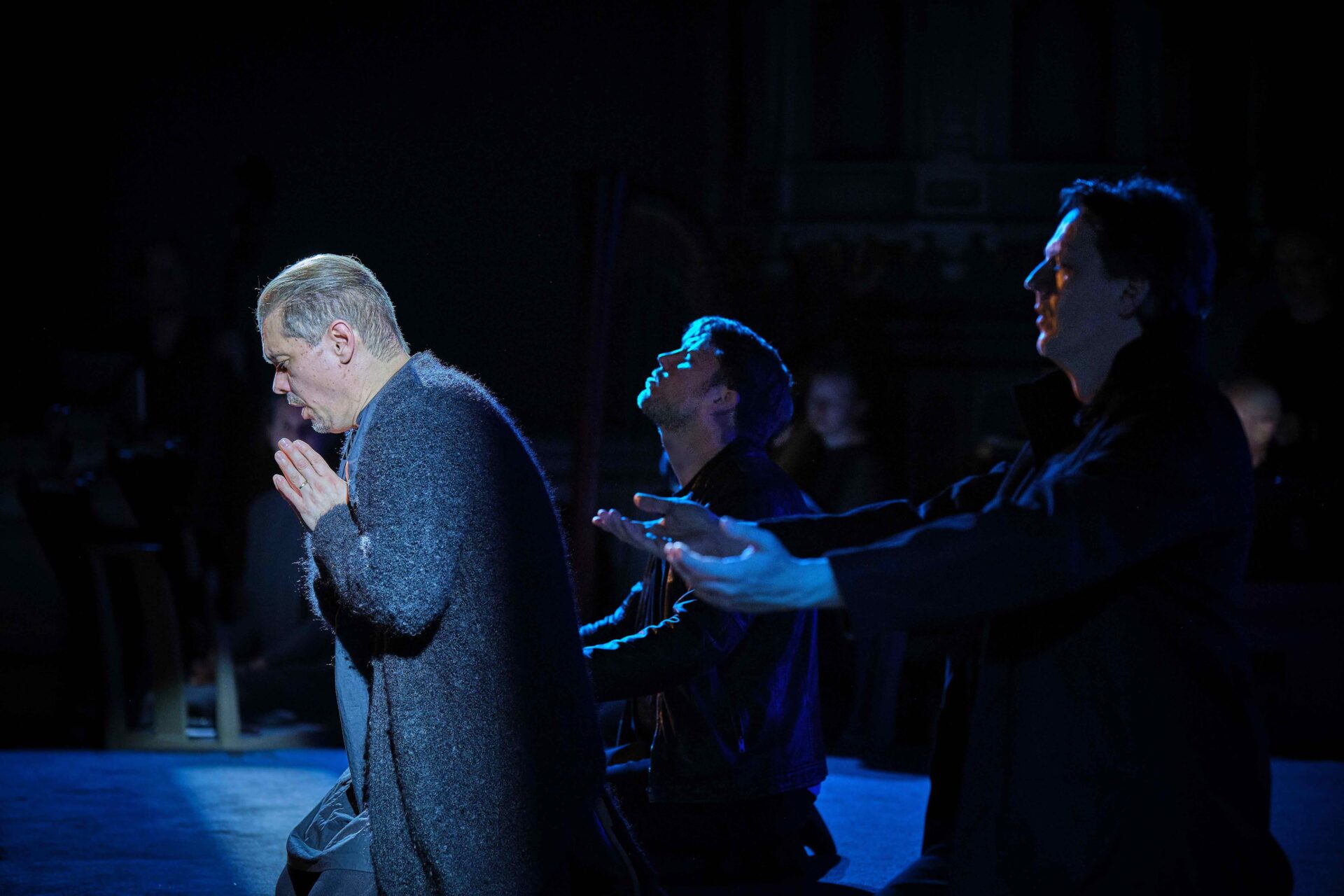
Curlew River 8 © Heikki Nenonen
Performance History
August 31 & September 1, 2023
Ukuyö ja Aaria Festival, Finland
Echoes
September 2023
“A gripping production directed by Aleksi Barrière, presenting the audience with music theater in its most formidable guises. (…) Combining absorbing video projections, delicate lighting and befittingly subtle costumes, the stage imagery of Barrière, Étienne Exbrayat and Lucia Schmidt was conceived with utmost insight, bridging the score and the venue together in organic manner.”
Jari Juhani Kallio, Adventures in Music
September 2023
“The staging is realized with dense intensity and makes a strong impression. All its elements, including the video, create a harmonious whole.”
Eero Tarasti, Amfion
Read Aleksi Barrière’s article about noh and contemporary opera:


