

Musictheatre
Premiere
August 29, 2024
Venue
Espoo Cathedral, Finland
Production by the Urkuyö ja Aaria Festival
In collaboration with La Chambre aux échos
“Blue-yellow-green is the world like a chained man’s bruise”
Directed by Aleksi Barrière, The King is Dead! combines Peter Maxwell Davies’ Eight Songs for a Mad King and Olivier Messiaen’s Quartet for the End of Time – two masterworks that, in the abyss of the horror of their time, hear the song of birds. Premiered in a German prisoner-of-war camp in 1941, the Quartet for the End of Time tells of light in the midst of darkness and finds its dark mirror in the Eight Songs for a Mad King, an immersion in the head of a king who has lost his mind – or perhaps a king amongst prisoners? The works are presented in a twine that alternates them movement by movement.
Starting from the year 1788, George III, King of Great Britain and Ireland, started experiencing episodes of a form of bipolar disorder. Because of his status, out of compassion (and sometimes thirst for gossip), his words were recorded and passed on, and ultimately served as the basis of Randolph Stow’s and Peter Maxwell Davies’ empathetic monodrama Eight Songs for a Mad King (1969).
In 1940, Olivier Messiaen was among the many Frenchmen who were sent to the front, captured by the Wehrmacht, and kept in a prisoner-of-war camp. Because he was recognized to be a reputable composer, he was offered an opportunity to avoid forced labor, and instead devote himself to the creation of a composition to be performed in the stalag – one of the many displays of culture that were put on in such contexts for the eyes of the world. Messiaen used this chance to write a Quartet for the End of Time full of apocalyptic imagery, tainted by messianic hope for the end of the catastrophe of History.
Given the circumstances, the very fact that these works exist is a miracle. But that miracle is no coincidence – it was made possible by converging interests and social norms that give special value to the voice of a king or an artist, over the lives of most anonymous mental patients and inmates. Through the context of their inception, both pieces touch upon the core of one of our greatest taboos: what is a human life worth if it’s deemed unproductive? Under the Third Reich, those who could not participate in the economy (including forced labor) were promptly discarded as ‘dead weight’ and ‘lives unworthy of life.’ The mentally ill were the archetype and the first victims of this logic, enacted by eugenics laws as early as 1933.
Messiaen and Davies show us the violence that lurks in darkness where outcasts are confined; but by expanding our notions of rhythm and color through they shared interest in traditional Indian music, they also unfold a glimpse of a timeless time that our civilization of overproduction knows little about. In the words of Messiaen: “The abyss is Time, with its sadness and weariness. Birds are the opposite of Time: our desire for light, stars, rainbows, jubilant singing.”
Aleksi Barrière
Team
Concept and Realization
La Chambre aux échos
Music
Peter Maxwell Davies & Olivier Messiaen
Dramaturgy, Stage Direction, Scenography
Aleksi Barrière
Lighting, Scenography
Étienne Exbrayat
Graphic Design (Costume)
Lucia Schmidt
Baritone
Holger Falk
Musical Direction (Davies)
Jukka Untamala
Ensemble
Jenny Villanen (flute), Olli Leppäniemi (clarinet), Eriikka Maalismaa (violin), Markus Hohti (cello), Kirill Kozlovski (piano), Xavi Castelló (percussion)
Pictures

The King is Dead 1 © Jori Grönroos
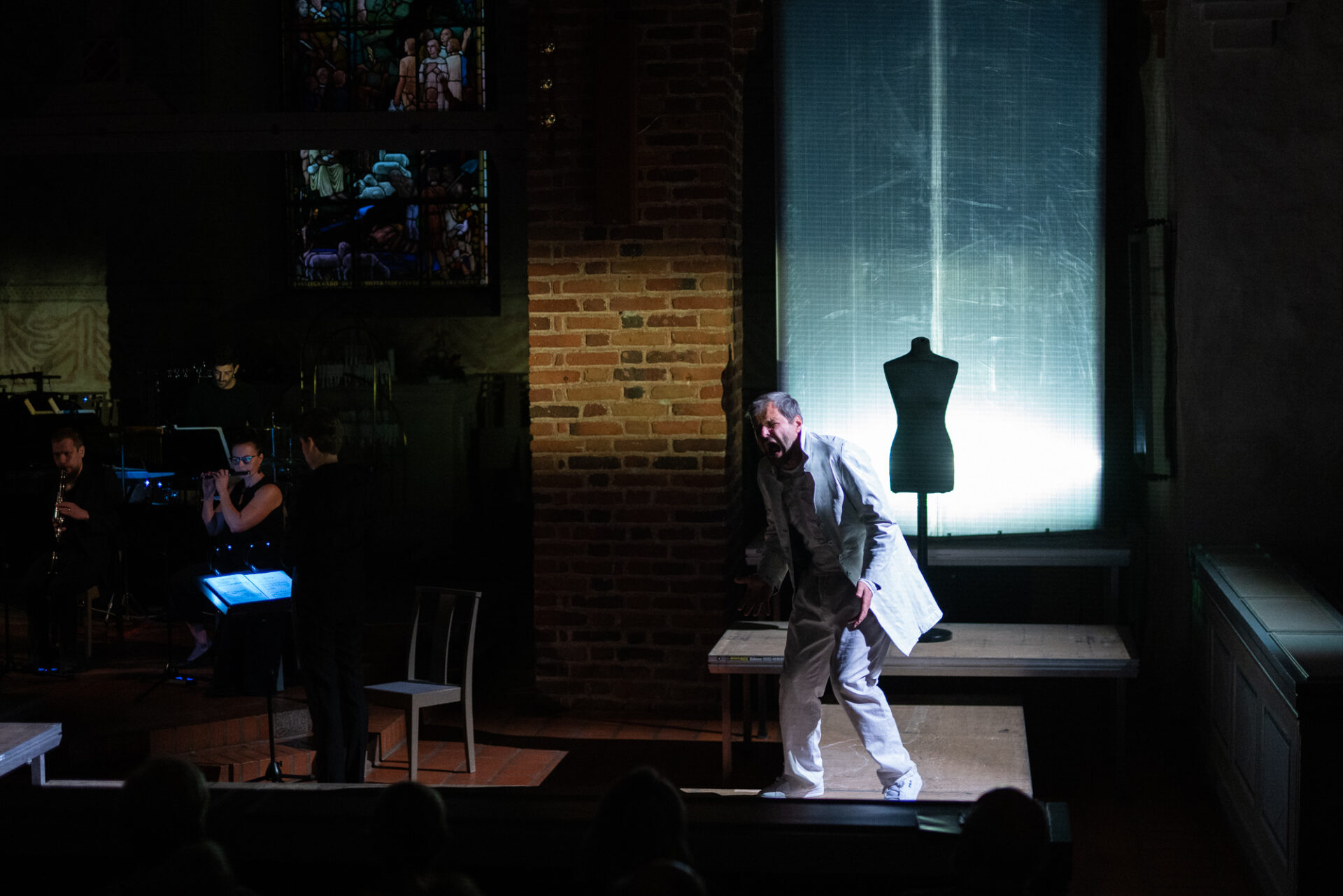
The King is Dead 3 © Jori Grönroos
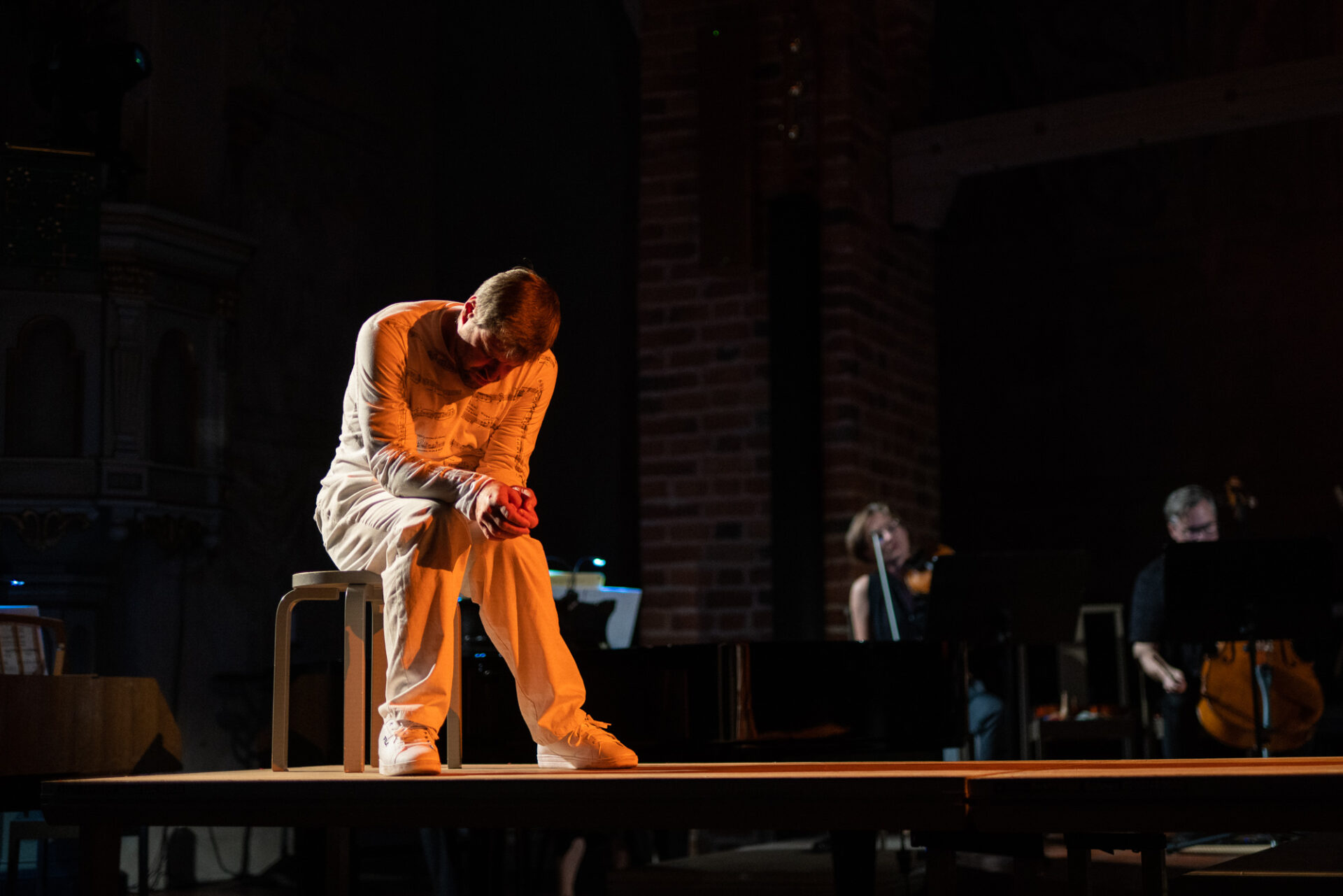
The King is Dead 4 © Jori Grönroos
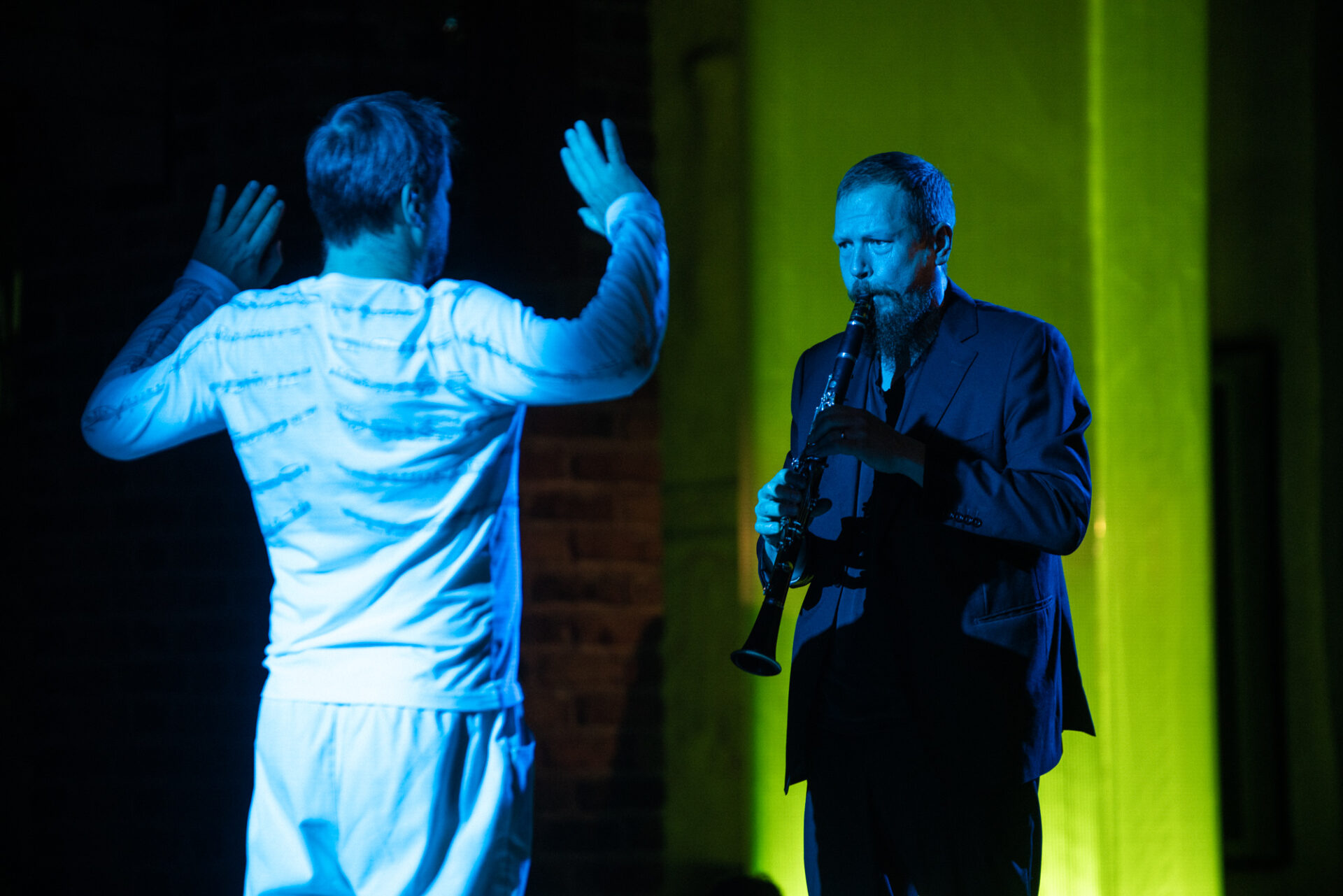
The King is Dead 5 © Jori Grönroos
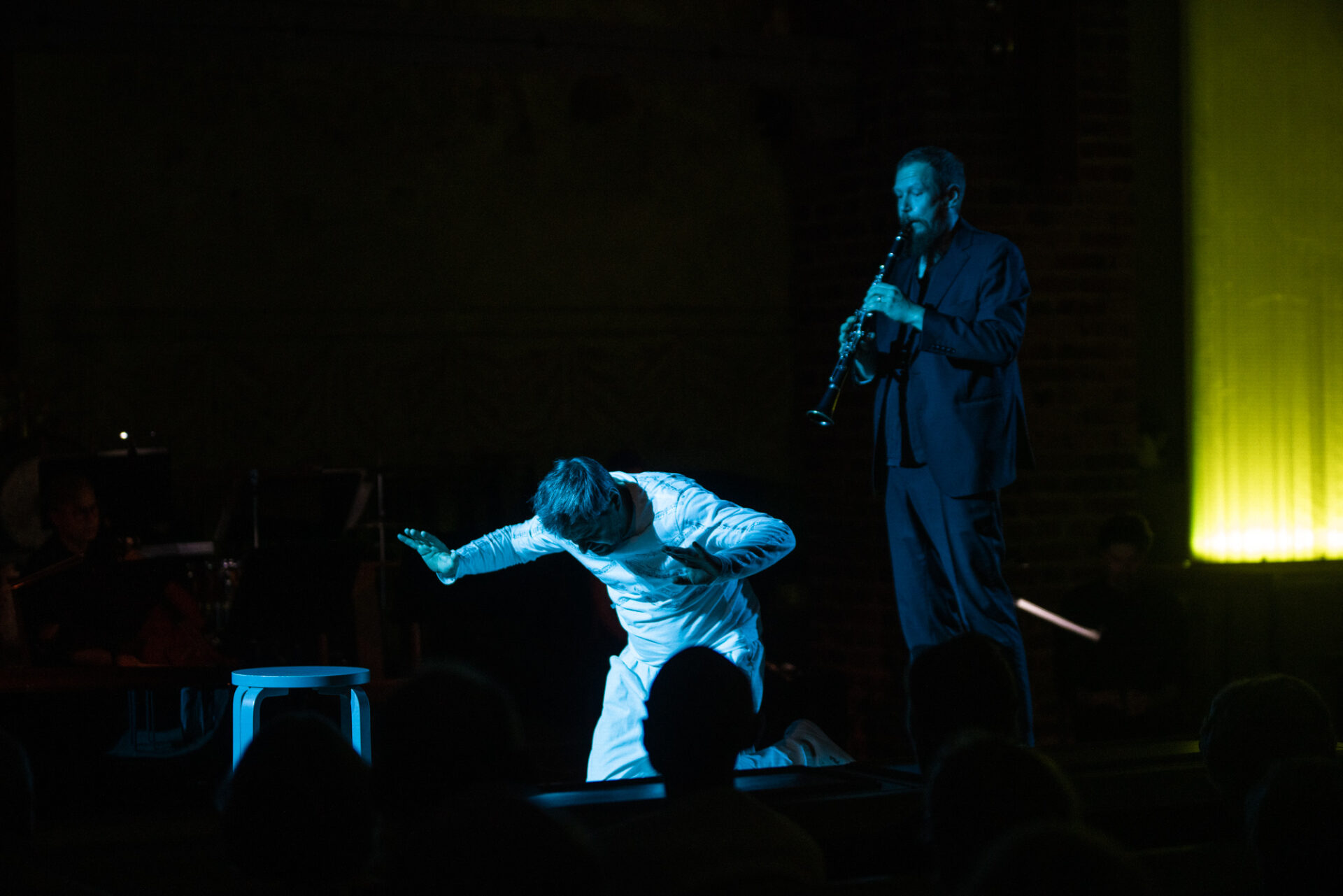
The King is Dead 6 © Jori Grönroos
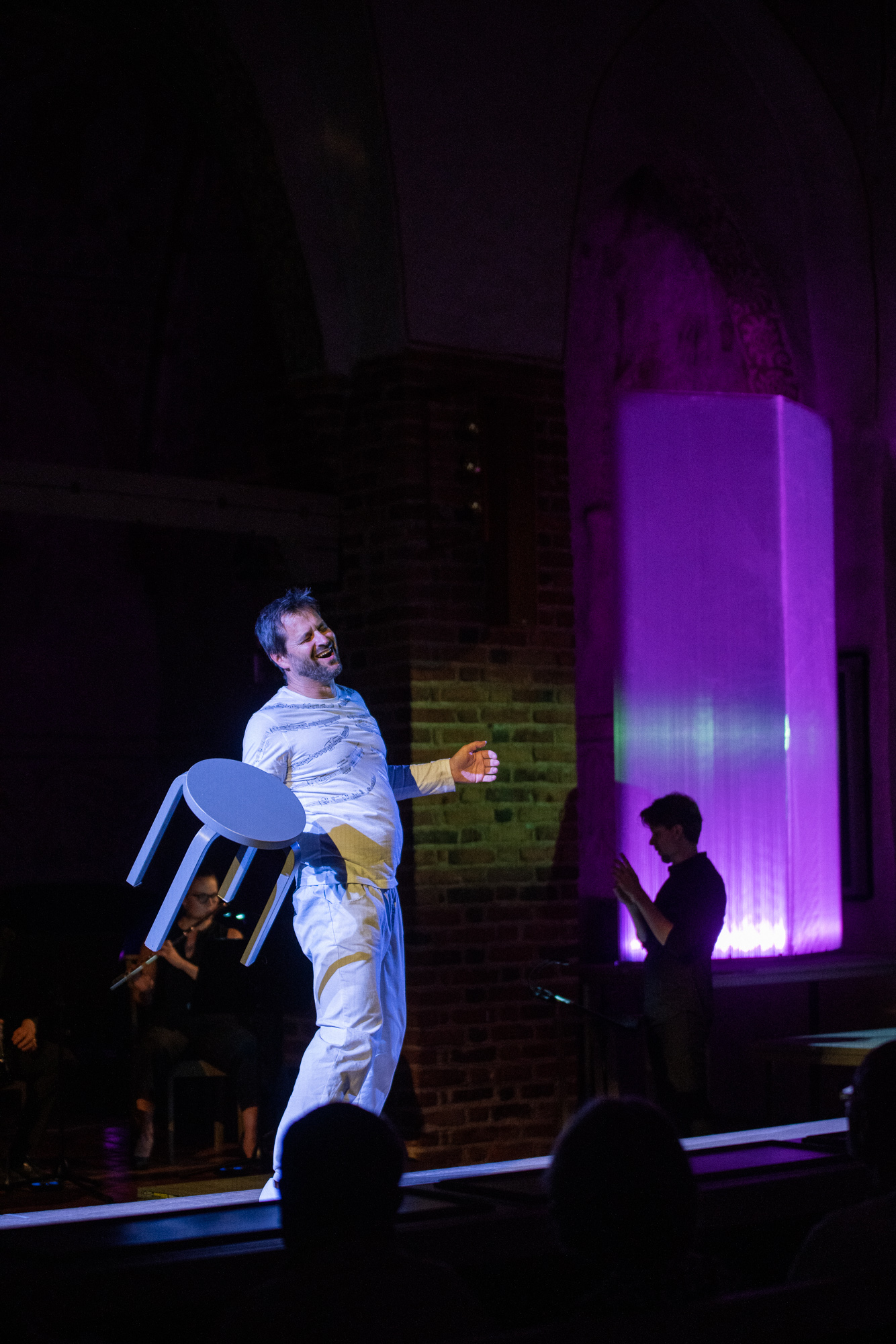
The King is Dead 7 © Jori Grönroos
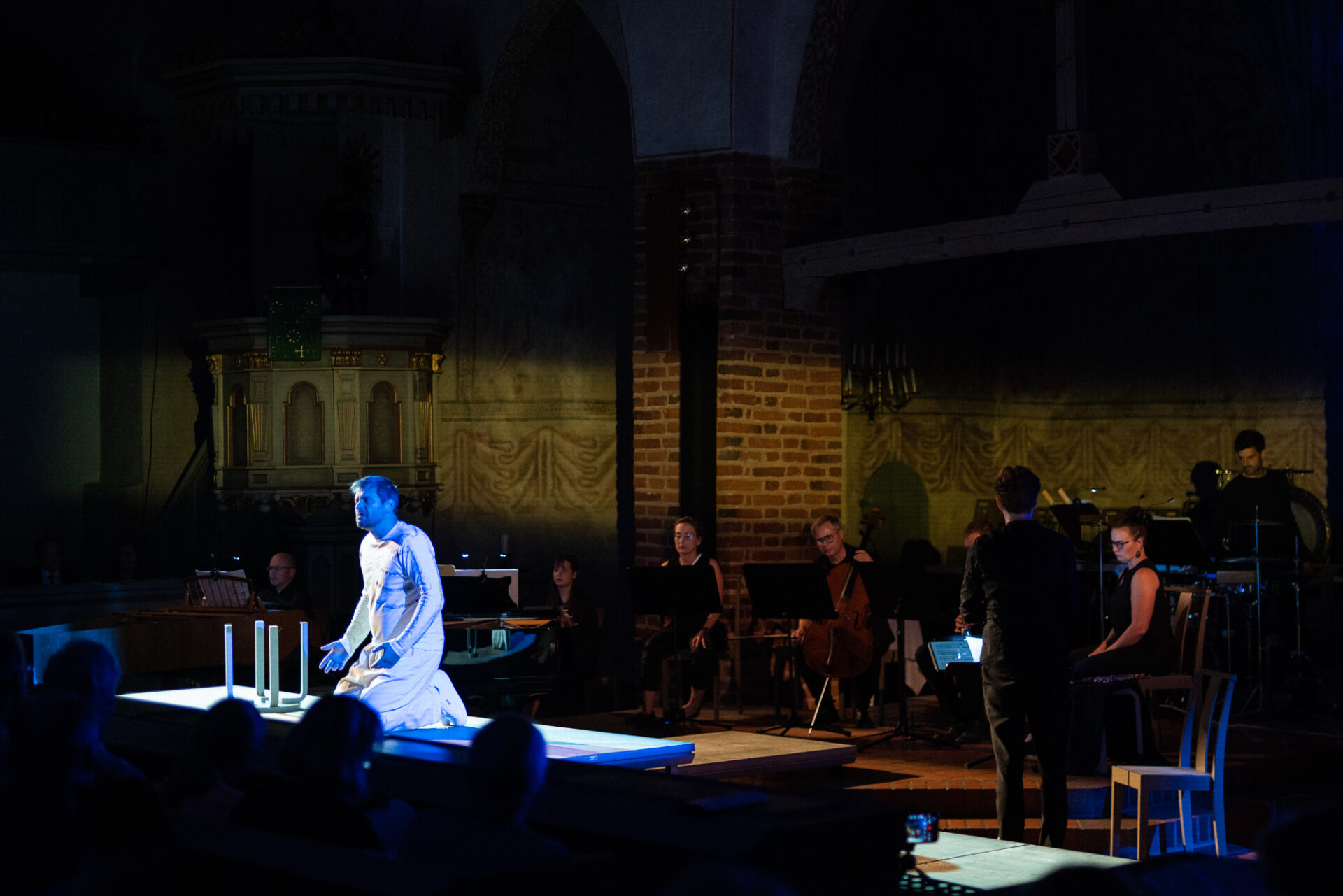
The King is Dead 8 © Jori Grönroos
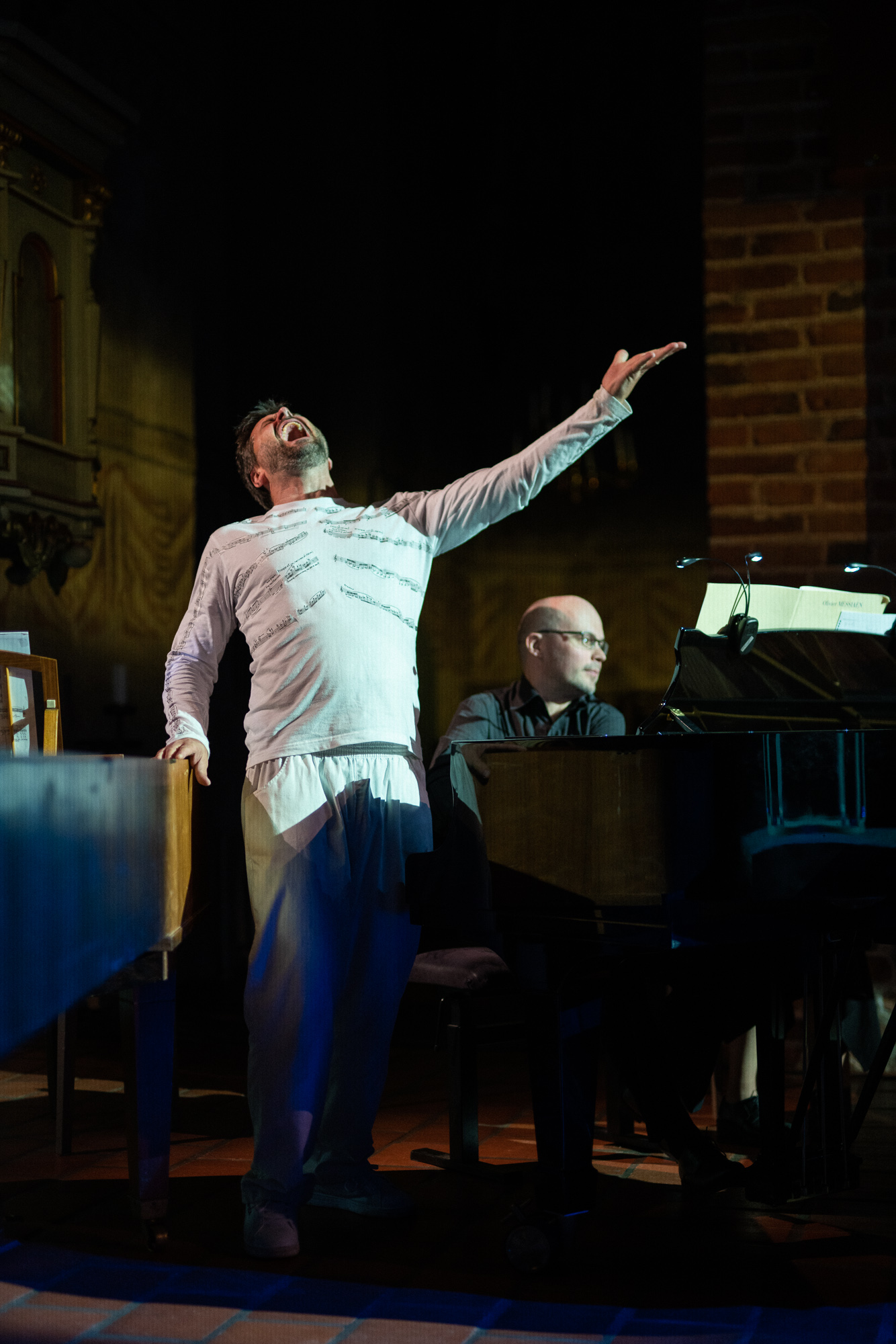
The King is Dead 9 © Jori Grönroos
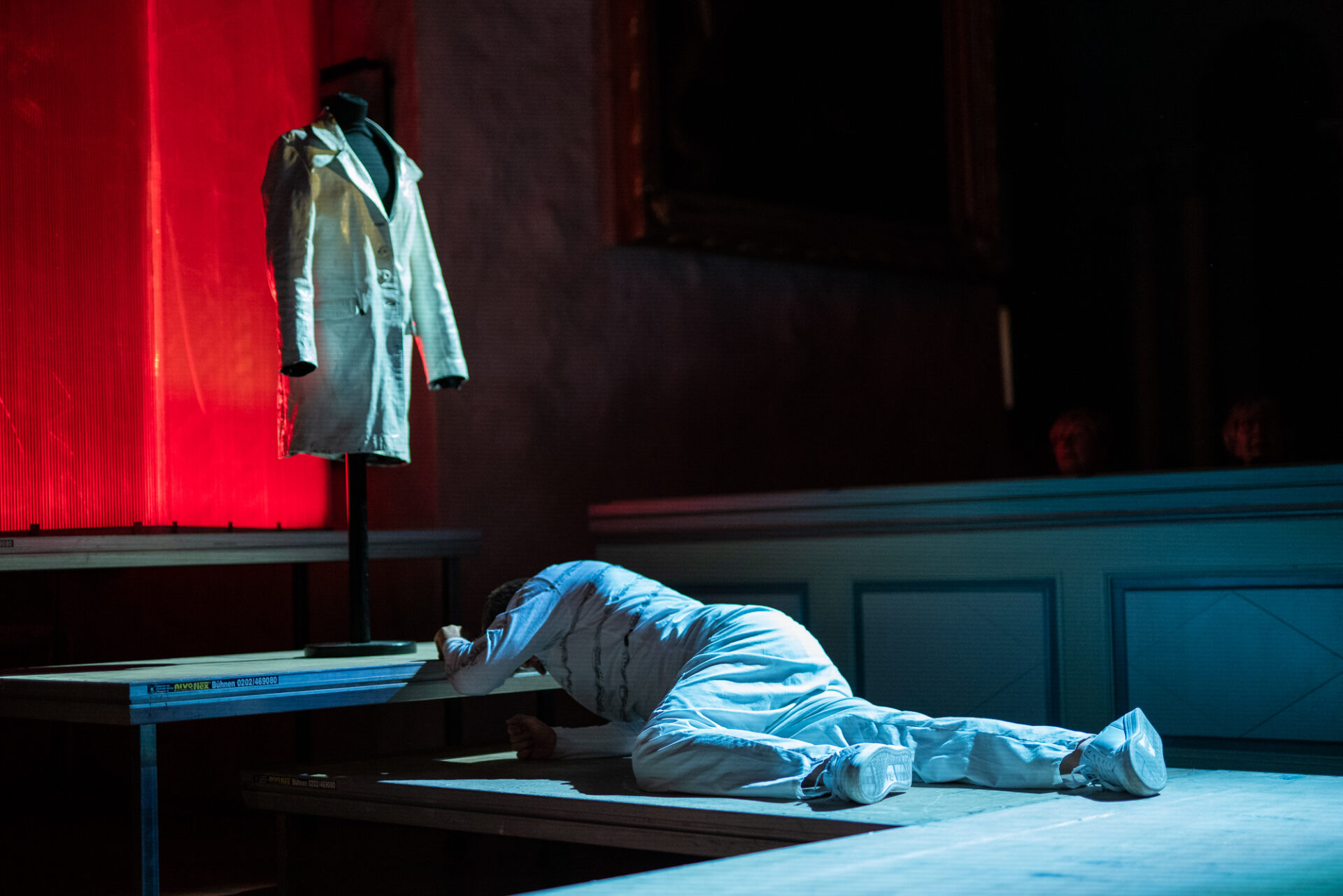
The King is Dead 10 © Jori Grönroos
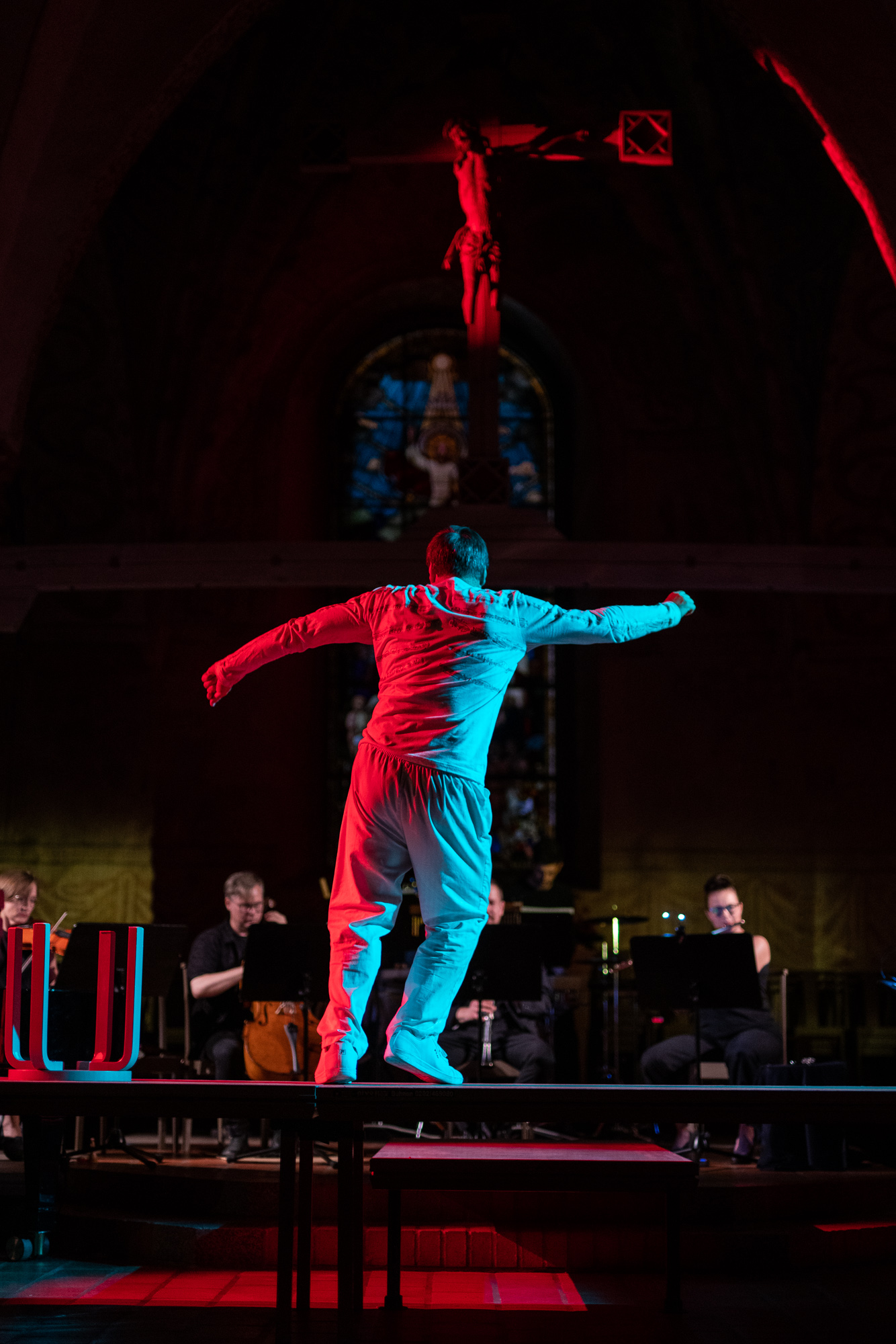
The King is Dead 11 © Jori Grönroos
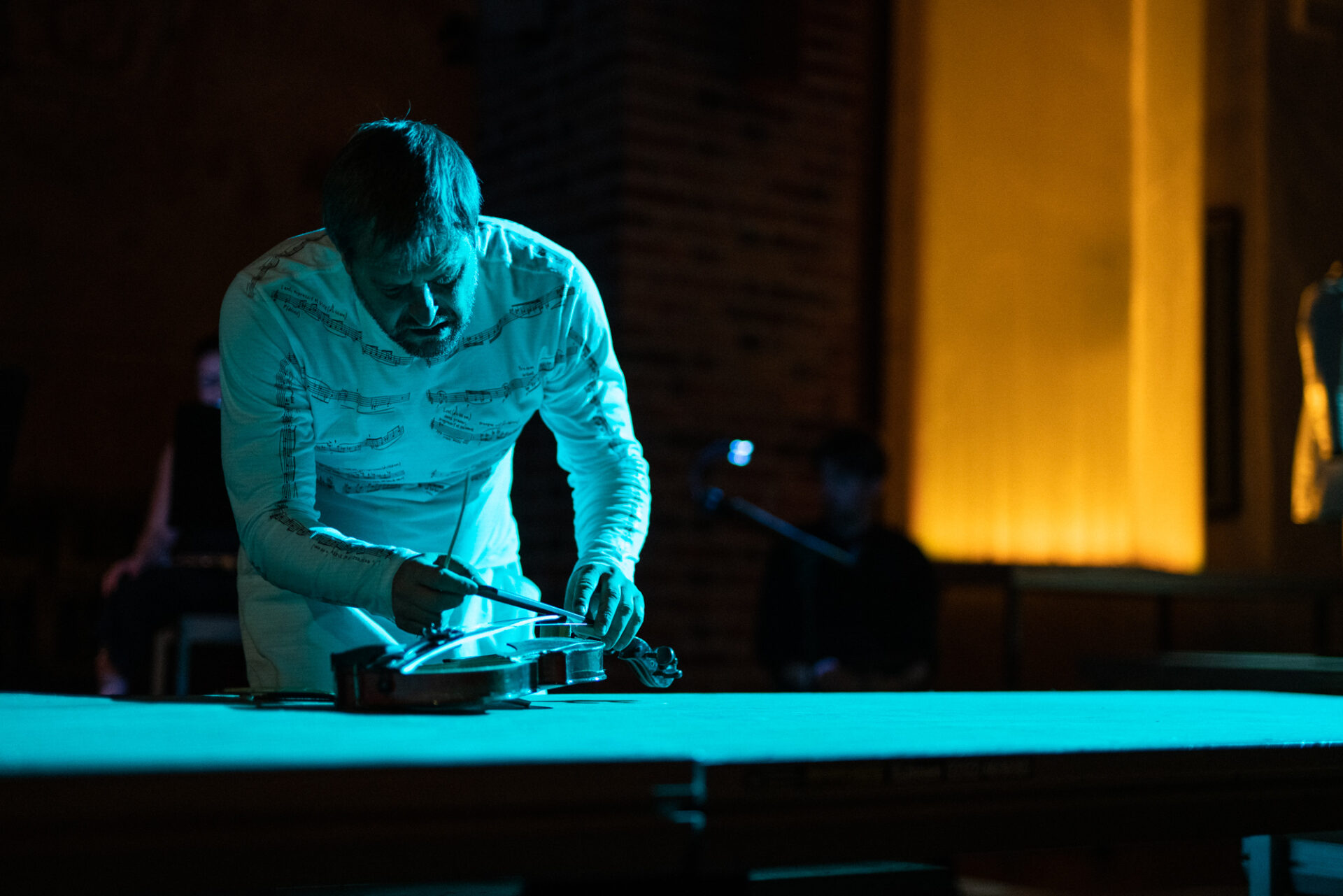
The King is Dead 12 © Jori Grönroos
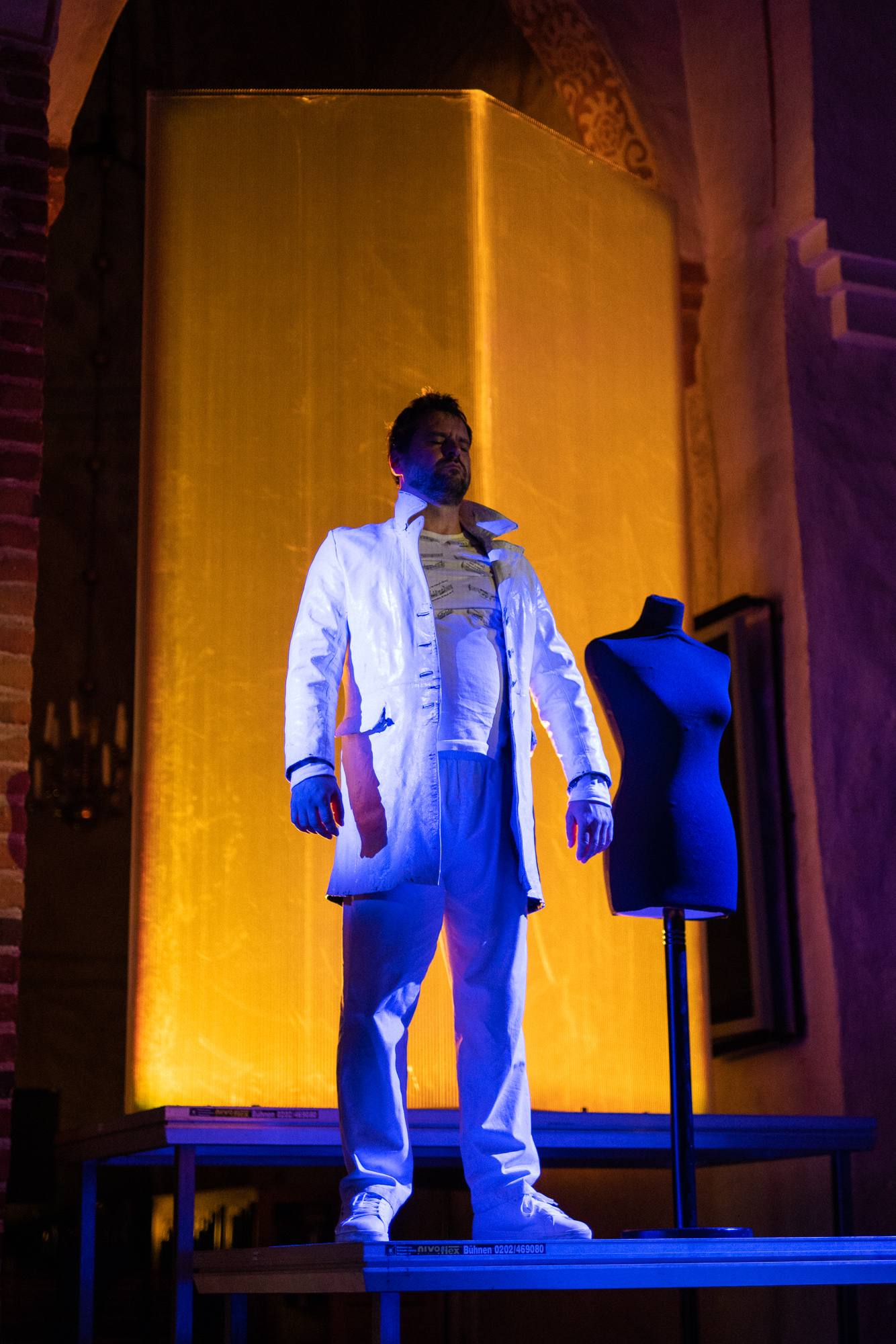
The King is Dead 13 © Jori Grönroos
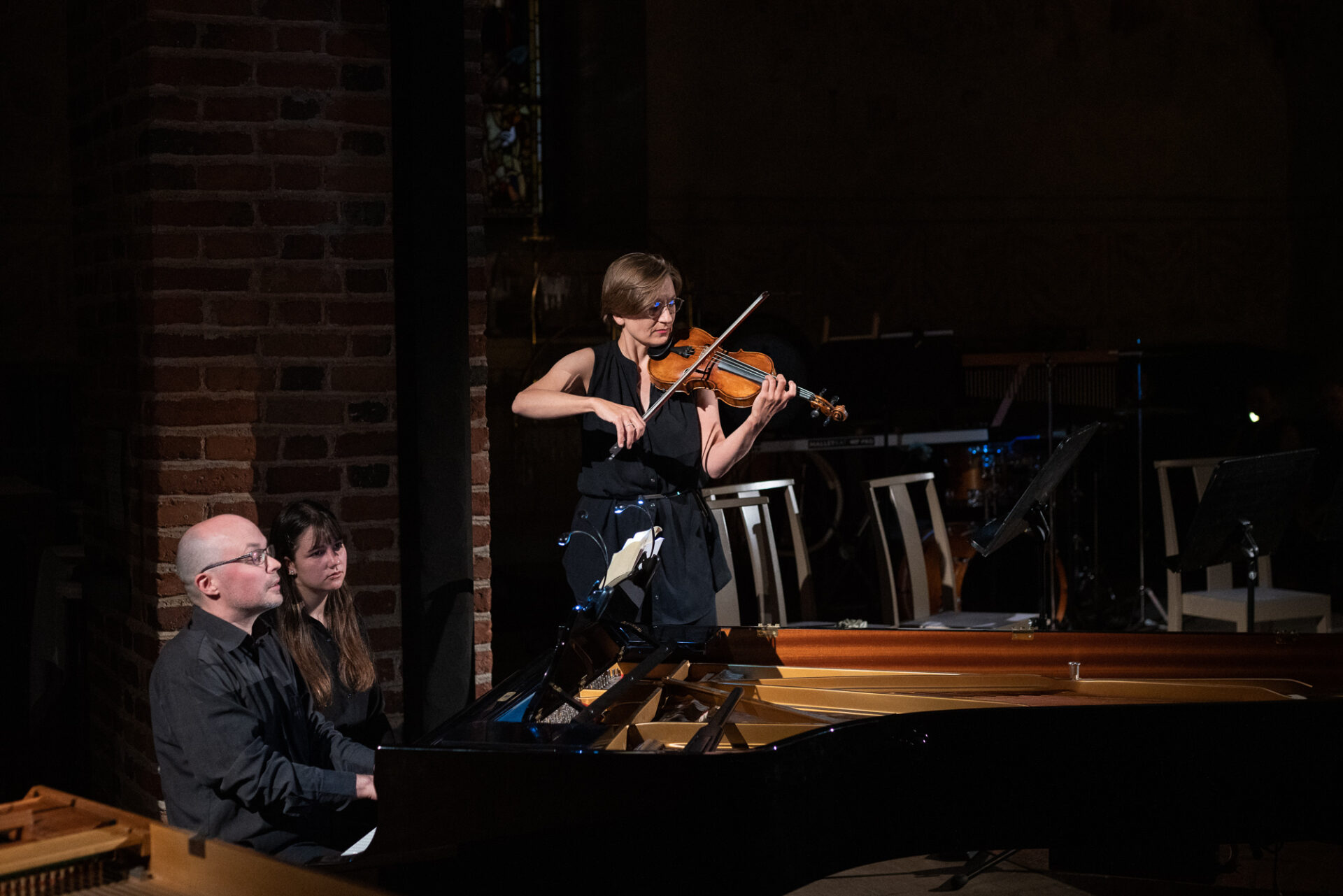
Performance History
August 29, 2024
Ukuyö ja Aaria Festival, Finland
